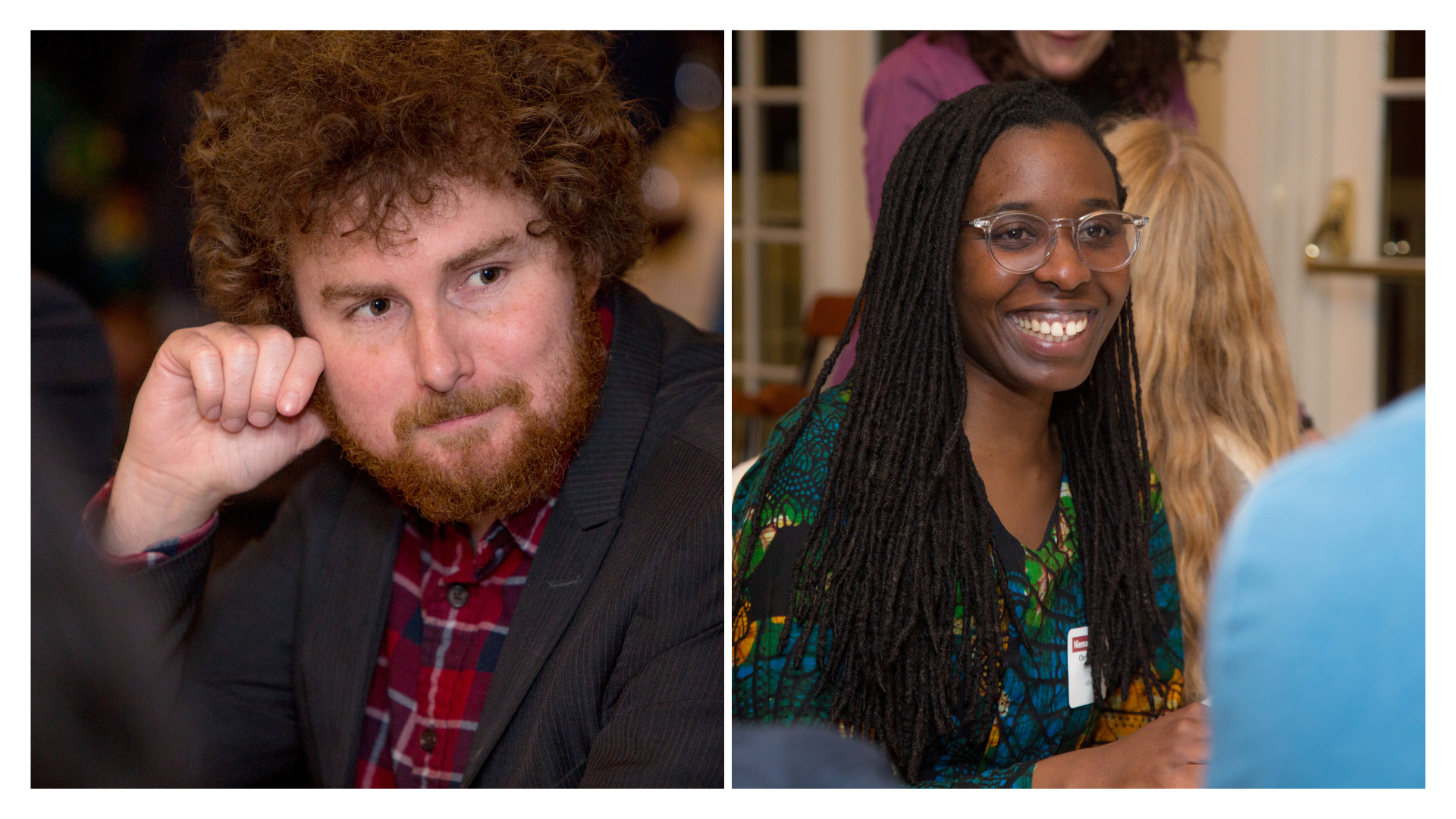
The opening sentence of my first message to Christine Mungai ended with the words: “fellow continent person.” It was August 2017, and we were the two Africans in that year’s cohort of Nieman journalism fellows at Harvard University. Although our home countries were about 4,000 kilometers (approximately 2,500 miles) apart in Africa, being from here means sharing a shorthand understanding of the world with your fellow Africans.
That shorthand doesn’t have many structures to support it, however.
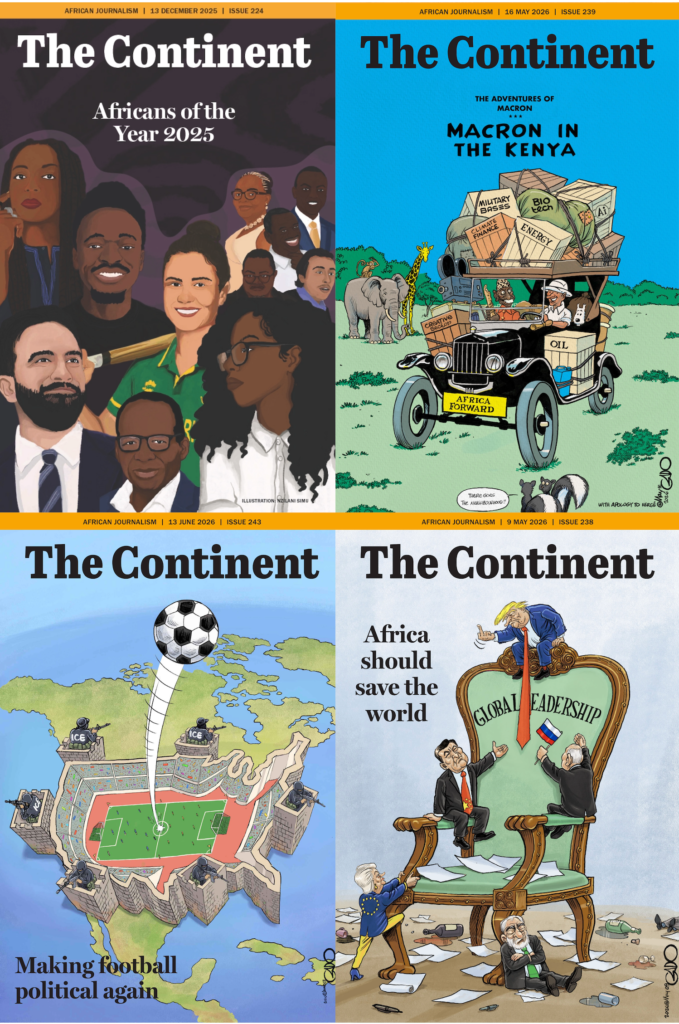
Nine years after our first meeting, Christine and I are now working together to build one such structure: The Continent, a 30-page digital newspaper that aims to create a shared reality for Africans to learn about their communities, one another, and our continent.
In a world that seeks to segregate us, this pan-African platform lets people literally read from the same page. As one reader said, the weekly provides “biting criticisms of power in contemporary Africa, with love as the engine.”
“Love” is a word that readers consistently use to describe The Continent. They also use words like “fun” and “trust.”
While many media outlets have outsourced how their journalism looks, feels and functions (or doesn’t), to American-owned corporate algorithms, The Continent owes its existence to people. A PDF of each edition goes out to readers via WhatsApp, Signal and email. All we ask is that they share it with others. We don’t advertise, have a fancy website, or pay much attention to social media. Yet we’ve managed to reach over 30,000 subscribers in the six years of our existence, solely by organic growth. If someone is a subscriber, it’s because a human — not an ad or an algorithm — personally sent them their first edition. So it’s organic growth in the realest sense of the word, mediated by another living thing.
Building it has been hard. It wouldn’t have been possible without the deep trust that comes from working with friends, with other human beings in their joys and complexities. Our success shows how the friendships we make can help save journalism.
When Chris and I first met nearly a decade ago, on the steps of a stately brick apartment building just off Harvard Square, it was one of those sweltering August days that you don’t picture when you first get the call informing you you’ll be spending 10 months in Massachusetts as a Nieman Fellow. I was coming from a biting South African winter, Chris from the idyllic weather of high-altitude Nairobi, near the equator.
During those long autumn days and even longer winter nights, friendships were built with my Nieman classmates that last to this day. From Mat Skene, then at Al Jazeera, I internalized the lesson that a manager must back their team no matter what. In her first editorial as editor-in-chief of The Continent, Chris pointed to the wisdom of Dustin Dwyer, an NPR reporter who shared his view that journalism is a prayer, offered to the universe with no set expectation of impact, but often important in of itself.
And from Diana Marcum, a Pulitzer Prize-winning reporter for The Los Angeles Times who passed away a few years after our Nieman year, I learned the unbridled joy of following your curiosity, meeting new people, and weaving beautiful stories — lessons that have stayed etched into my soul. In an interview with Nieman Reports in 2015, Diana shared that her overall purpose in journalism was “to introduce people to each other, to let them get to know each other.” Of her interview technique, she said: “We just go out and make friends.”
Diana’s words speak to something our profession often forgets: Friendships make for good journalism, not just a better world. They strengthen both the journalism we create and the organizations that create journalism.
I had arrived at Harvard broken down by working at a toxic news organization — a reality that sometimes feels like the default setting for our industry. But I returned home buoyed by all those lessons, by new friends scattered around the world, and with a desire to fix the dysfunctional newsroom I had left. That would turn out to be impossible. But those frustrations helped set a course for a new friendship, with the then-Africa editor of my newspaper, Simon Allison. We both liked coffee, loved problem-solving, and were a bit obsessive about how journalism could best respond to the hole it had dug itself into. When COVID-19 arrived, with the accelerated collapse of journalism it heralded, we were ready, and so started The Continent.
An excellent team of people, largely volunteering their time — because that’s what you do when a friend messages and asks you to join in on their wild idea — put out the first edition in April 2020. It was sent to a few dozen people on WhatsApp, the messaging platform that is ubiquitous in Africa.
Friendships make for good journalism, not just a better world. They strengthen both the journalism we create and the organizations that create journalism.
Chris was an early subscriber. We bumped into each other at events up and down the Africa-Europe time zone, with WhatsApp acting as a place to share frustrations and hopes. From her vantage point as a fan of the publication, but still from a distance, Chris wrote a piece in 2021 about The Continent for Nieman Lab, followed a few months later with a cover story for us on the ties and tensions between Africa and the United States. Then, in late 2024, she messaged me to test the waters, after seeing we were advertising for a news editor for The Continent. A few months later, I sent her a WhatsApp message saying: “Come work with us.” This July, in a smooth transition of power, she took over as editor-in-chief.
It’s fitting that all these transactions took place on WhatsApp. Encrypted chat platforms are increasingly where community happens. Google, X, Facebook, and TikTok get more of the media industry’s attention because we’ve bought into the idea that the massive reach of those platforms will somehow help journalism survive, and that it’s a good idea to outsource community-building to their algorithms. A more cynical take, however, is that this line of thinking is prevalent in our industry because those platforms have co-opted some outlets in order to silence their dissent, and used their considerable financial power to fund much of our industry’s research, which in turn, backs their prevailing viewpoints.
But I suggest you take a look at your own WhatsApp, iMessage, Telegram, and Signal chats, and see what people send you. That’s where communities are being built by people, and that’s where they share news of their world. Journalism has been slow to build products that thrive in these spaces.
That’s why we built The Continent as a single, bespoke product designed for people to read, enjoy, and then share by forwarding it in peer-to-peer chat platforms. In our most recent survey, which had 1,500 detailed responses, 80% of readers said they shared the newspaper with others, with 35% reporting they do so regularly with more than five people and groups. These are readers who are sharing the newspaper in Slack channels at work, or a diaspora group on Signal, or even a family WhatsApp chain. Readers also talked about the paper being a “conversation starter” or a way to initiate a flirtatious connection, as a source to cite in conversations, a weekly habit, and even a way to win arguments with their friends.
That is testament to a newspaper creating friendships based on trusted information. We are philanthropically funded, thanks to readers who work at organizations championing The Continent — and who believe in the importance of backing original African journalism. That also helps ensure the newspaper is free to readers. And it has allowed us to build a base from which we are now starting to do our own events and sell merchandise, from woven clothing to framed copies of the magazine’s original artwork. We know from surveys and tests that people want to support The Continent and wear things that show their support. These steps will help us build a business around that community.
All this is being put together by an entirely remote team, working across six countries with no travel budget. That in itself is possible because the trust and shorthand that comes with friendship creates a foundation that makes anything possible.
If we have more of these kinds of friendships, we might just save this journalism thing.