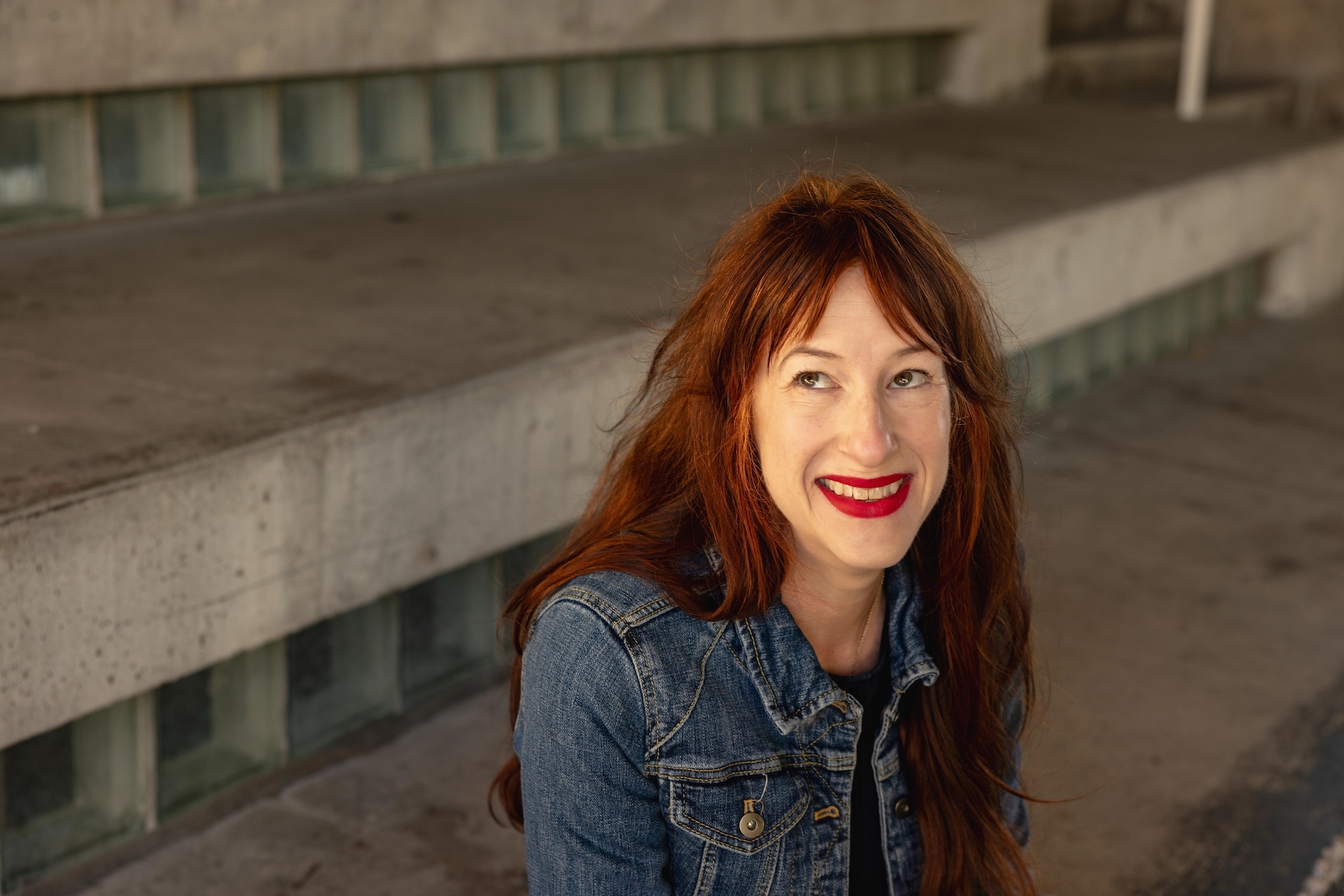
Liz Kelly Nelson, a longtime newsroom leader, spent years shaping digital strategy at outlets including USA Today, Gannett, and AOL. But while serving as a vice president at Vox, she noticed a shift: Some of the organization’s most talented journalists were leaving to build independent careers on platforms like YouTube, Substack, and TikTok.
Nelson found common factors in their choice to leave — a desire for greater editorial control and diversified financial opportunities in an increasingly uncertain industry. Intrigued by what she saw as a broader transformation in how journalism is created and consumed, Nelson left Vox in 2023 to study these trends during a Sulzberger Fellowship at Columbia University’s Graduate School of Journalism.
She then founded Project C in 2024, a community and research hub supporting journalists navigating the creator economy, and co-founded The Independent Journalism Atlas in 2026 with Justin Bank and Ryan Kellett, a 2025 Nieman Fellow, to map the growing ecosystem of independent reporters.
Related Posts
While speaking with the 2026 class of Nieman Fellows, Nelson discussed why media consumers — especially younger ones — are turning to independent voices, how creator journalists are building sustainable careers, and what their rise means for the future of the news ecosystem.
Edited excerpts:
For us, a creator model journalist is a person who combines elements of journalism with content creation techniques. In the work that we did for the Journalism Atlas, we really drilled down on who would qualify. The top five [criteria] are: One, are they producing journalistic work? Usually, we are looking for somebody who’s covering a niche topic, because the general interest publication is now your TikTok feed [and] your inbox. People are looking for very specific people who are experts in what they’re writing on or creating video content about. We also look that they are perceived as a trusted messenger to a loyal audience, [and] they are working independently, outside a traditional news organization. Finally, the last characteristic is they’re all using the creator economy to try to build a sustainable career.
[Creators in] the Journalism Atlas and the people I work with at Project C [are not who] we would call news influencers. But we acknowledge that news influencers are a very big source of how many people, not just in the U.S., but around the world, are learning about what’s going on. And those are really your Joe Rogans [the influential American podcaster] — people who tend to be more opinionated. In fact, we often call it “the opinion section of the internet,” but we really do see it as a continuum and an evolution. It’s not a replacement of what has come before, but it is an evolution, another place that consumers are turning to get news.
It’s very important that we put our focus on it, because we care about journalism, right? And because the audience is already there. There is not one creator that’s losing sleep wondering, “Is The Washington Post or The New York Times taking my audience?” Because that’s not happening, but the reverse is.
For audiences, especially Gen Z and Gen Alpha, these distributed platforms are their primary news sources. I have a 15-year-old son. He’s not unusual for his generation in that his primary news source is YouTube. There’s never going to come a point where [he’ll say], “It’s time for me to get a Time subscription [or] to start watching the evening news.” That is a generational behavior that is just not a part of what he and his peers are doing.
We need to be paying attention to that, because, if the ultimate reason that we do the work that we do is because we believe in the value of fact-based information and its ability to help people understand their world, then we need to make sure that the lessons and the pieces of what we know makes rigorous journalism are getting into those feeds.
At this point, there are no sure bets on either end of the equation as to how they’re making money. We encourage journalists to be on as many platforms as they can. You don’t ever want to be too over-indexed on one, because we know relying on a tech company is the last thing you want to do for your audience or for financial support.
I did a study with a group called the Video Consortium that we published in January … about video creators. Of the video creators that we interviewed, 56% said they aren’t earning enough “at all” to support themselves, though 40% said they were able to either partially or fully fund their livelihoods with their independent video work.
We see many of the journalists who are doing this have multiple sources of income. [For example], subscription fees for newsletters. But even then … usually the average [number] of paid subscribers is only 5% of the total number of subscribers.
There is advertising revenue for video creators, specifically on YouTube. And there are sponsorship deals. Now, the sponsorship deals are easier to get if you’re a journalist like Becca Farsace, who came from The Verge, who’s doing tech gear reviews. If you are creating [niche] content, it’s going to be a lot harder to get advertisers to come along with you in the same way that it has always been a challenge for news organizations to get the harder content sponsored. When it comes to TikTok, it’s almost impossible to be compensated as a journalist. The system was not built in that way. We see a lot of folks who are also consulting on the side, freelancing, [and] doing that work. The final piece that we’re working on now is trying to help the philanthropic community understand that they need to support these journalists.
“There is not one creator that’s losing sleep wondering, “Is The Washington Post or The New York Times taking my audience?” Because that’s not happening, but the reverse is.”
— Liz Kelly Nelson, founder of Project C and co-founder of The Independent Journalism Atlas
I don’t think creator journalists will, nor should they, ever replace traditional newsrooms, because there are things that you still need a bigger organization to do. One of those things are big investigative enterprise reporting projects, where you need a lot of resources to do something that often takes multiple reporters, photographers, videographers, [and] skilled editors to bring something together.
I think where we are going is a place where the traditional journalism industry, as it contracts, needs to get smarter about how it’s contracting to do the things that only they can do right, and not the things that perhaps can be better done by single actors elsewhere.
I was talking to a group of undergrads at George Washington University last fall, and I asked them what news organizations are doing [content creation]. They said, “Local news anchors are starting to do stand-up videos. They’re on TikTok … talking about the news.” I asked, “What do you think about that?” They said, “It’s cringe.” And that’s totally true. They’re trying to force themselves to do something that feels unnatural. I think we’re going to see a lot of false starts as we get there.
The news organizations that I see are doing this right, are being more thoughtful, testing in very specific, small ways.
We’re starting to see more partnerships between independent creators and news organizations. One of those [was by a] journalist who’s a member of Project C named Monique O. Madan, previously an investigative reporter for the Miami Herald. She went after an investigative story that she published [on Substack] about an ICE detention facility in Florida. It got picked up and was published in the Miami Herald. That’s a great example of the kind of symbiosis [and] ways these two worlds can start working together.
Right now, the Houston Chronicle is working on a partnership with a creator. They are co-reporting an investigative story about compounding pharmacies in Houston. I would love to see more of that … [it] is often a frustration of journalists who specialize in investigative and longform work that it’s a really hard thing to do independently, not only because of the resources needed, but also because these algorithms want to be fed right all the time.
Another great example is MLK50 in Memphis, doing a partnership with a creator named Amber Sherman, who they call their creator-in-residence. They produce content with her every week, actually … but she still maintains her own [social media accounts]. They’ve been doing that work for about a year, and the content that they co-published has raised MLK50’s engagement on Instagram and TikTok by 664%. They did this modestly, and they connected with Amber in a very equitable partnership, to [demonstrate] there are things that you can learn from us, but there are also things that we need to learn from you. The news organizations that I think are really failing at this see creators as a marketing tool for themselves. We really need to see more thoughtful models.
If the [situation] is that creators are distracting people from real news, my answer would be, “People aren’t engaging with real news, and if we take the creators away, they aren’t going to come back.” My solve for that is we need to better engage with where people are and understand that.
[I believe] our job at this point is not to support existing models. … We need to understand what [a] community really needs in terms of news and information, and that may be a newspaper, it may be that newspaper reimagined. It may be that newspaper partnering with creators … or supporting people who are independently passionate about their community, but what we need to do is support them with training in rigorous reporting, and help them be able to learn how to make a living. But if that’s who the audience is engaging with, we need to actually be there.
I do a lot of work with Joy Mayer from Trusting News and others to figure out what trustworthy work even looks like in this context. What is different about what makes creators trusted, versus a traditional news source? Why are audiences choosing this? Maybe part of that will help us understand how to better support creators, but maybe it’ll also help us help news organizations speak to audiences in these ways, to make connections with them that they’re not making right now. The news organizations that I get really excited about are ones like the Houston Chronicle or the Miami Herald, who are actually actively trying to understand how to build these partnerships.