The language of women’s liberation has long been used to justify war. The recent invocation of “saving” Iranian women being used to legitimize United States and Israeli military intervention deserves the same scrutiny. Journalists should be prepared to look beyond such rhetoric and ask who benefits from it.
In India, for example, we learned this lesson when the country’s ruling right-wing Bharatiya Janata Party (BJP) — not known for defending women’s equality, especially not Muslim women — suddenly started talking about women’s liberation, pushing a legal repeal of a practice by which Muslim men could instantly dissolve their marriages by saying the Arabic word for divorce aloud three times.
The BJP’s campaign to outlaw the practice of “triple talaq” started dominating headlines around 2016-17, while I was working at an Indian newspaper where a colleague and I had established a dedicated gender section. Normally, at a paper where covering gender was serious business, we would have been happy to see other outlets start covering the issue, especially as it was being described by the BJP as a move meant to empower India’s Muslim women — who were often rural and uneducated — and mark a historic step toward female freedom.
During a 2024 reelection rally in northern India, Prime Minister Narenda Modi referred to triple talaq, declaring, “By ending the practice … we have saved the entire Muslim family. … For centuries to come, Muslim daughters will continue to bless Modi.”
But looking beyond the face value of Modi’s statements, it didn’t make sense that the BJP, a party that had been unequivocal about its hatred for Muslims, had suddenly started caring about liberating Muslim women.
Since he became prime minister in 2014, Modi has repeatedly, indirectly or directly, called Muslims “infiltrators” who would “loot” India’s wealth if allowed to gain power. Although he has denied any animus toward Muslims, Modi has frequently asserted that Muslims have large numbers of children, implying they intend to make India a majority-Muslim country by strategic demographic domination, and he and his party have repeatedly mentioned the unsubstantiated conspiracy theory that Muslim men are luring Hindu girls to convert to Islam in an attempt to overtake the Hindu population. Recently, Human Rights Watch analyzed 173 speeches given by Modi during the 2024 parliamentary electoral campaign. The group found he made anti-Muslim remarks in more than 100 of them.
When the BJP’s “women’s liberation” narrative suddenly started dominating coverage, it obscured some important questions: Did these reforms reflect the demands of Muslim women themselves? Did they address the most pressing issues within the community? It soon became clear that the practice of triple talaq, although an issue of concern, did not affect the majority of Indian Muslims. Critics countered that the idea of banning the practice was not necessarily intended to liberate women, but to stir up more anger against Muslim men by portraying them as backward and barbaric, and in the process, make them vulnerable to arrest since the law criminalized the divorce ritual rather than just rendering it legally invalid. Many news outlets also pointed out the hypocrisy of a campaign for female empowerment in a country where marital rape is still not a crime.
Covering the triple talaq debate taught me an essential lesson about journalism, and especially about stories concerning gender and women’s rights: They cannot be reduced to slogans or official framing by those in power.
It was something I would come to see repeated in many global conflicts — most recently in the rhetoric around the “liberation of women” being used as justification in the U.S.-Israeli military actions in Iran and the wider region.
The initial press coverage of the strikes against Iran, launched on Feb. 28, mostly echoed the official framing of the conflict, with phrases like “freedom,” “liberation of women,” and “regime change” featuring prominently in leaders’ comments justifying the attacks. Speaking to the media aboard Air Force One, President Donald Trump described Iranians as “the most evil people ever … who cut babies’ heads off, chop women in half.”
As the strikes began, social media filled with claims that intervention was necessary to “save” Iranian women, that military action was the only path to liberation from the “repressive” regime.
During the first week of the war, The Jerusalem Post ran a front-page story with a photo of an Israeli fighter pilot holding the hand of a veiled Iranian woman. The headline read: “Women, Life, Freedom: The Israeli Way.”
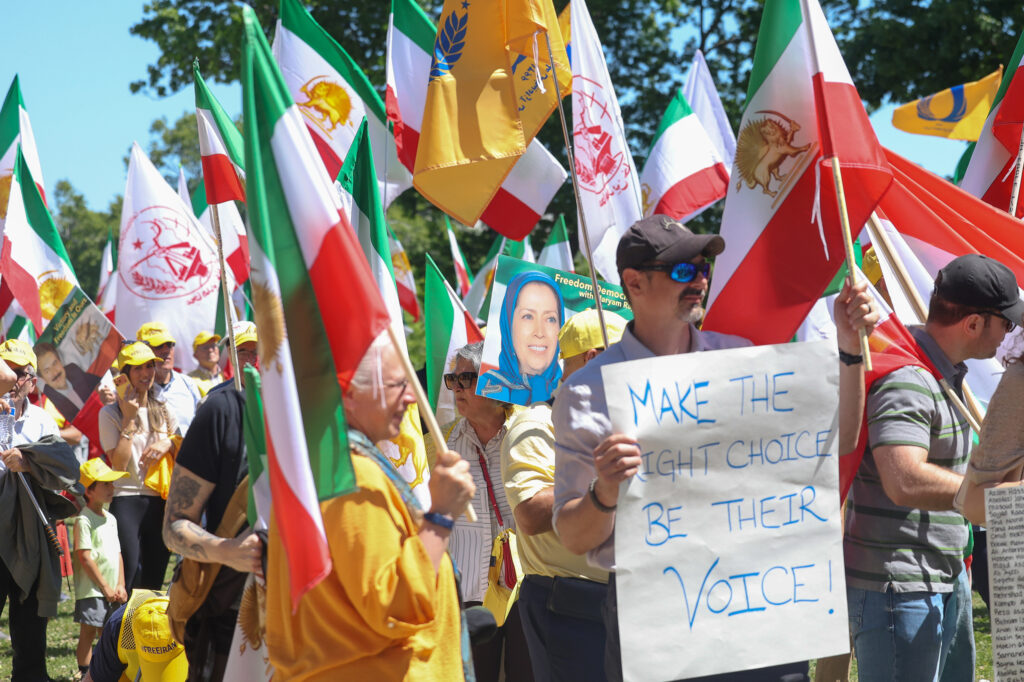
Israeli Prime Minister Benjamin Netanyahu has repeatedly invoked Iranian women’s rights. In June last year, a day after launching attacks on Iran, he addressed the Iranian public by echoing parts of a popular protest slogan: “This is your opportunity to stand up and let your voices be heard. Woman, life, freedom.”
These are not isolated statements, but point to a pattern under which women’s rights are co-opted to serve political agendas that have little to do with genuine empowerment.
When narratives of saving women emerge from those in power, whether from Trump’s and Netanyahu’s comments on Iran, or the BJP’s comments on triple talaq in India, they demand scrutiny from journalists, not just repetition.
To be clear, journalists should not dismiss women’s rights stories, but in such situations it is important to critically examine whose voices are being centered — or silenced — and what political interests are shaping the framing. Journalistic objectivity does not mean passive repetition of dominant narratives, but active scrutiny of how issues are being constructed and used.
In the BJP case, for example, reforms that may have appeared progressive on the surface can actually reinforce or deepen inequality in practice, and be used to serve political purposes. Many argued during that debate that meaningful reforms to improve women’s lives required engagement within the community, not top-down interventions.
The current U.S.-Israeli conflict with Iran raises some of the same questions for journalists that echo the coverage of triple talaq: Whose interpretations of liberation are being amplified? Whose lived experiences are being sidelined? And how does the framing of human rights issues shape public understanding of this geopolitical conflict?
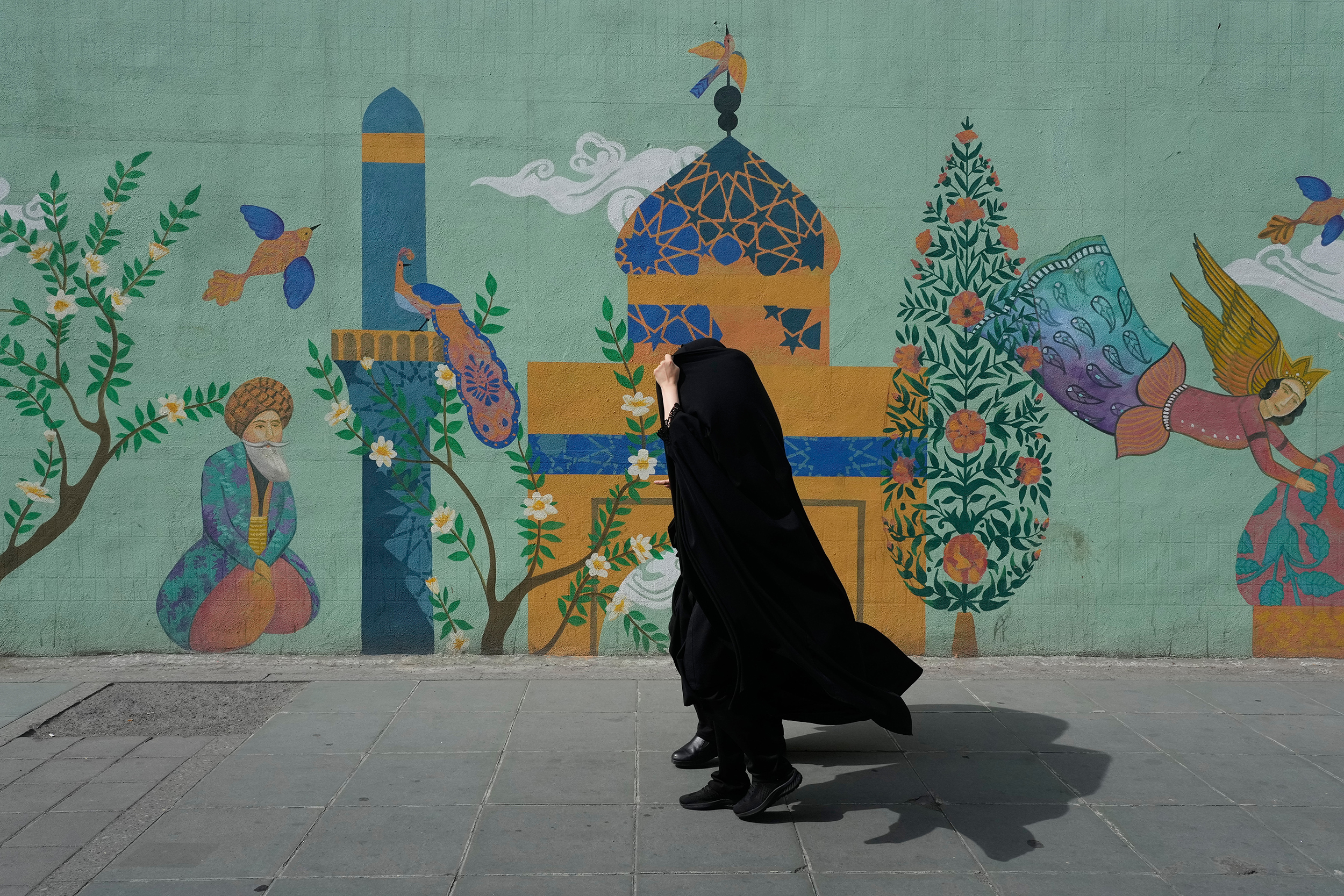
In “Do Muslim Women Really Need Saving?,” anthropologist Lila Abu-Lughod argues that instead of saving women, the focus should be on understanding that women have different ideas about freedom, choices, and justice. In other words, a woman in a bikini and a woman in a hijab can both be free, or not, depending on their situation and what freedom means to them.
Invoking women’s rights to justify U.S. intervention abroad is not a new phenomenon. In “U.S. Foreign Policy and Muslim Women’s Human Rights,” author Kelly J. Shannon explores how women’s rights became central to U.S. engagement with the Islamic world. When the U.S. invaded Afghanistan in 2001, the war was framed in part as a mission to liberate women — a narrative widely echoed across media and policy circles. The New York Times editorial board, for example, described it as a “collateral benefit.”
Scholars such as Sara R. Farris have a name for this pattern. In her 2017 book “In the Name of Women’s Rights,” Farris refers to “femonationalism,” or the use of feminist language to advance nationalist and anti-Muslim agendas.
Unlike traditional feminism, the co-opting of feminist narratives to justify state intervention in the name of liberation, sometimes called “embedded feminism,” is used in an attempt to establish moral legitimacy for state actions and make any kind of opposition harder. In some cases, it is used as a tool to redirect public anger toward specific groups or to portray political opponents as dangerous or uncivilized, which can help consolidate electoral support or justify stronger state action.
Women’s bodies have long been battlegrounds for political agendas. But just as important is recognizing how women’s issues are often appropriated and co-opted by those in power, not to empower women, but to tighten control over already marginalized communities. When we, as journalists, enter a conflict zone or comment on it from afar, we must remain conscious of this reality or we risk doing additional harm to the “victims” others claim to be speaking for.
Ashwaq Masoodi, NF ’20, is a Berlin-based independent journalist. Most recently, she worked as Lead Editor (Asia) for Global Press Journal.