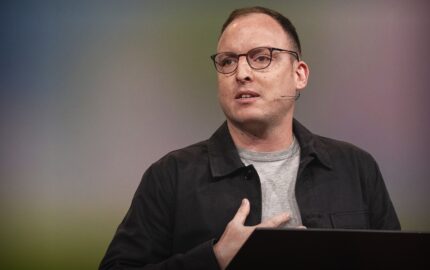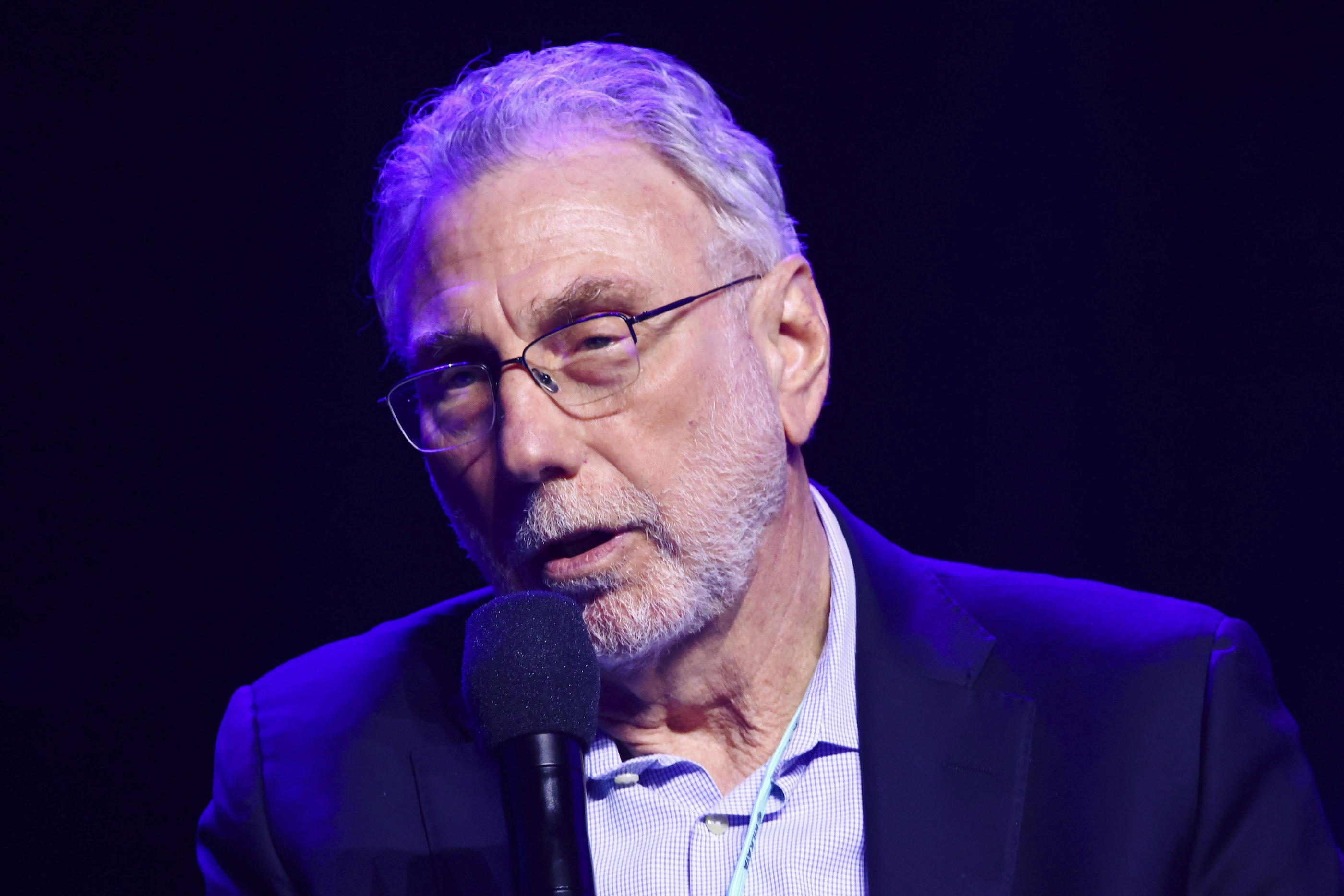
Marty Baron has led some of the most impactful news operations in American journalism. As editor of The Boston Globe, he oversaw the investigation into clergy sexual abuse that earned the paper a Pulitzer Prize for public service in 2003 — work later depicted in the Academy Award-winning film “Spotlight”. As executive editor at The Washington Post from 2013 to 2021, he oversaw reporting that earned 11 Pulitzer Prizes, and grew the newsroom from 580 to nearly 1,000 journalists.
Since retiring, Baron has watched The Post struggle — through a contentious leadership transition, and a recent round of mass layoffs. In October 2024, he publicly called the paper’s decision to cancel an endorsement of presidential candidate Kamala Harris “cowardice, with democracy as its casualty.”
Baron spoke to the 2026 class of Nieman Fellows about what he feels went wrong at The Post, what traditional media need to do differently, and where he sees potential growth areas in the industry, even as it shrinks and consolidates.
Edited excerpts:
The roots of this go back to 2018 or so. It was apparent then that The New York Times was really diversifying. It had invested tens of millions of dollars in its cooking app. It had acquired Wirecutter. I mentioned all that to my publisher at the time. I said, “They’re preparing for the post-Trump era. We need to prepare for the post-Trump era as well.” So much of our traffic and our subscriptions were driven by the accountability work that we were doing. One of the things I said is, we need to bring [owner Jeffrey] Bezos in here and make him aware of our competitive situation. We live in a time where there are maybe only one, two, or three survivors in any industry. He never did bring Bezos in for that strategic discussion. I think Bezos’ attention was really on a lot of other things, when his marriage broke up. Then there was the pandemic.
When I left, we had a plan for expansion. But right at that point, the digital advertising market collapsed. They probably should have put a hold on the expansion, but they expanded even more, and that got them into a huge financial hole. That was really the beginning of the problems. Then they hired Will Lewis, and I think his strategy was, in my view, largely incomprehensible. They certainly didn’t execute successfully. They did a lot of things to alienate the staff. You started to see a real exit of talent.
At this point, Bezos has the sense that the existing model doesn’t work in the current media environment with AI and all of the other pressures on the industry. He has said, “Take it down to the studs, make it profitable, and then we’ll see where we go and where we invest.”
I do think we have to make some changes. First of all, I think it’s important that we cover entire communities and the whole country, so people see themselves fairly in our coverage. They will believe us more if they see that we understand their lives separate and apart from politics.
Second, I think that we need to be a lot more transparent about how we go about our work. Take them along for the ride. One of the things VICE did so well is that [viewers] were traveling along with the reporter on the reporting process.
The third thing, which gets to the issue of TikTok and YouTube, is we really have to find a different way to communicate. All of us worked for communications companies, but it turns out they’re really bad at communicating to the public the way it receives information today.
We do need to rely on the personalities of the people on the staff. That doesn’t mean becoming an opinion-monger, but it does mean having a sense that it’s not just an institution, it’s actually a human being. Find ways to do that, including in short-form video. Even if you have a long investigation, there is a way to slice it up and make it more of a tasting menu. You see this on social media all the time. It’s a snippet of something, and then it gets you interested.
What’s happening with influencers is that they’re communicating authenticity, and because they communicate authenticity, people believe they have authority. In traditional media, we’ve always focused on our authority — the reporting process — that is the highest priority. We haven’t paid enough attention to authenticity. We have authority generally, but people don’t give us credit for it. We have to figure out how to do that. We’ve got to experiment, that’s just the nature of our times.
In traditional media, we’ve always focused on our authority — the reporting process — that is the highest priority. We haven’t paid enough attention to authenticity. We have authority generally, but people don’t give us credit for it. We have to figure out how to do that.
I think the media is just going to look very different than it does today. [Outlets] will be more narrowly defined as institutions and have narrower missions. There will be many more of them. They won’t be like the BBC — to cover the whole world — a whole country, or even a whole region. [Their missions] will be “covering sports in Boston.” Or “covering politics in Massachusetts.” Something like that.
There are a lot of things that are going to get completely lost. Arts coverage is hugely at risk because it doesn’t have as large of an audience. On the other hand, I think you’ll see a lot of things that are emerging that will succeed.
There will be mergers like what you see with Paramount, the acquisition with CBS and CNN. But that is consolidation in the shrinking part of the media market. In other areas, it’s growing and it’s more fragmented. Do I think all the Substack people are going to survive? I don’t. How many Substacks can you subscribe to? They’re not all going to survive.
I think all journalists should, to some degree, think of themselves as an entrepreneur, either an entrepreneur who’s experimenting with different things within a news organization, helping that organization to innovate, or innovating on their own.
I had an early lesson on this when I was at the Globe; 2009 was just a terrible year for us. And The New York Times Company was threatening to shut down The Boston Globe, so the employees had to take 20% compensation cuts. It was a very bitter period.
I went to the head of a digital advertising company. I said, “Look, can you explain to me, the whole advertising model? Because I don’t believe our advertising people, and I’m not sure they know what they’re doing.” He said, “The internet is the business of passions. What is the passion that you’re going to be writing about that actually might generate revenue, that people would be willing to pay to read?” It’s a business of niches.
You have to think in terms of value. I would put value into two categories. One is utilitarian value, how practically useful we are today to our readers, and secondly, psychic value — people do want their news organizations to hold powerful people accountable. So psychic value and utilitarian value are the two areas we need to focus on every single day. If that’s what you’re doing, or operating solo, you’ve got to think about that as well.
There’s been a lot of great coverage in the world of technology. I think there’s a real need for that. Wired has done great coverage. They have lively writing, lively presentation. Our lives are so heavily influenced by technology and … everywhere I go, everybody talks about AI.
Technology is going to influence our lives in the most fundamental, profound way. And writing about that, who’s behind it, who finances it, who benefits from it, how you can use it to your advantage, how to make careers in that field — all that, to me, that’s the growth area.