The first time I came face-to-face with Immigration and Customs Enforcement agents on the streets of Minneapolis, they were dragging an East African man around by the handcuffs in a frozen front yard on Park Avenue, just a few blocks from where Renee Good would be shot and killed by a federal immigration agent a month later.
The man was without a coat in frigid temperatures that had me, a Minnesota resident for three decades, shivering uncontrollably. The agents from U.S. Immigration and Customs Enforcement (ICE), most of them wearing masks, dropped the man in the snow repeatedly as they tried to get him to unlock the front door to his apartment. A crowd on the sidewalk grew as neighbors came running out of their front doors with whistles in their mouths.
This early interaction didn’t involve the kind of routine violence we are now seeing from federal agents in the Twin Cities. People yelled, blew whistles, pleaded with and insulted the agents, who shook their pepper spray canisters and looked nervous.
Outnumbered and unable to gain access to the man’s apartment, the agents eventually trooped back to their illegally parked cars. As the agents retreated, I identified myself as a journalist and asked the one who was not wearing a mask why they were there. He gruffly told me to move so I didn’t get run over by his rental car. They drove off, but observers told me they returned a few days later to take the man into custody.
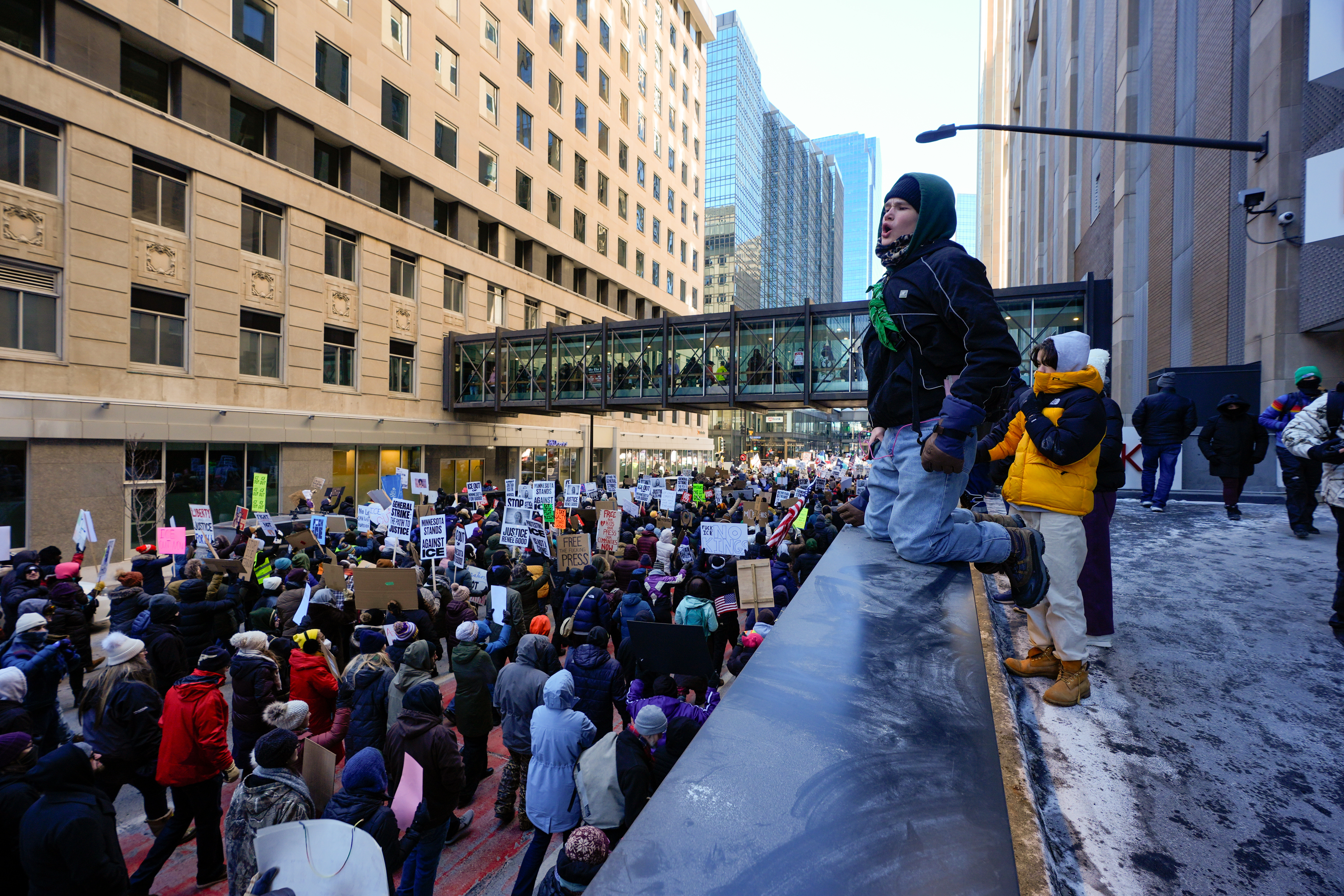
It’s been two months since that encounter, and the city’s threshold for outrage has shifted. The unconstitutional arrests that shocked the public in the early days of the government’s “Operation Metro Surge” are now too common to rate a mention in news reports. They’ve been replaced by disturbing images of masked, anonymous federal agents using pepper spray and tear gas on peaceful observers, and even detaining a 5-year-old boy in a bunny-ears hat.
As a reporter who covered law enforcement accountability long before George Floyd’s murder in 2020, what’s now happening on the streets of Minneapolis sometimes has the feel of a dystopia, with feds arresting and brutalizing citizens, seemingly with no real response from state authorities. As residents remind me all the time, “No one is coming to save us.”
From the first days of the surge, local journalists have been kept in the dark by federal authorities. When the Department of Homeland Security wants something to be known, they typically send some “high-ranking officials,” who only speak to media organizations the administration considers friendly, and who agree to quote them anonymously and with seeming credulity. Public announcements from the agency are rare, and mostly consist of social media screeds stitched together into an email.
As residents remind me all the time, “No one is coming to save us.”
There are so many basic facts the government doesn’t share with the public, including who is arrested, on what charges, or where they’re being sent. Out of the several thousand arrests that federal officials are claiming have taken place, they have cherry-picked a few dozen people with criminal records to highlight on social media, in service of their narrative that immigrants perpetrate violent crime. Unless families feel safe enough to talk publicly to the press, or they have access to an attorney, little information is known about the others who have been arrested.
Faced with a dearth of credible information from the federal government, my local colleagues and I have been covering the story from the ground up. We’ve written about observers being threatened by federal authorities. We’ve chronicled the terror people have felt seeing their neighbors dragged away in handcuffs, or their family members disappeared into an opaque immigration system. We’ve documented how people are patrolling outside schools or escorting their immigrant neighbors to work. And we have used available court filings and documents to try to get a clearer picture of what is actually happening to people in our state.
Most importantly, we have not let the federal government’s narratives stand without scrutiny. Our reporting has shown that most of the immigrants arrested have no criminal records, and that even those who do have largely been taken from state and county jails, not during the random street sweeps that make up the majority of the federal agents’ actions in Minnesota.
Most importantly, we have not let the federal government’s narratives stand without scrutiny.
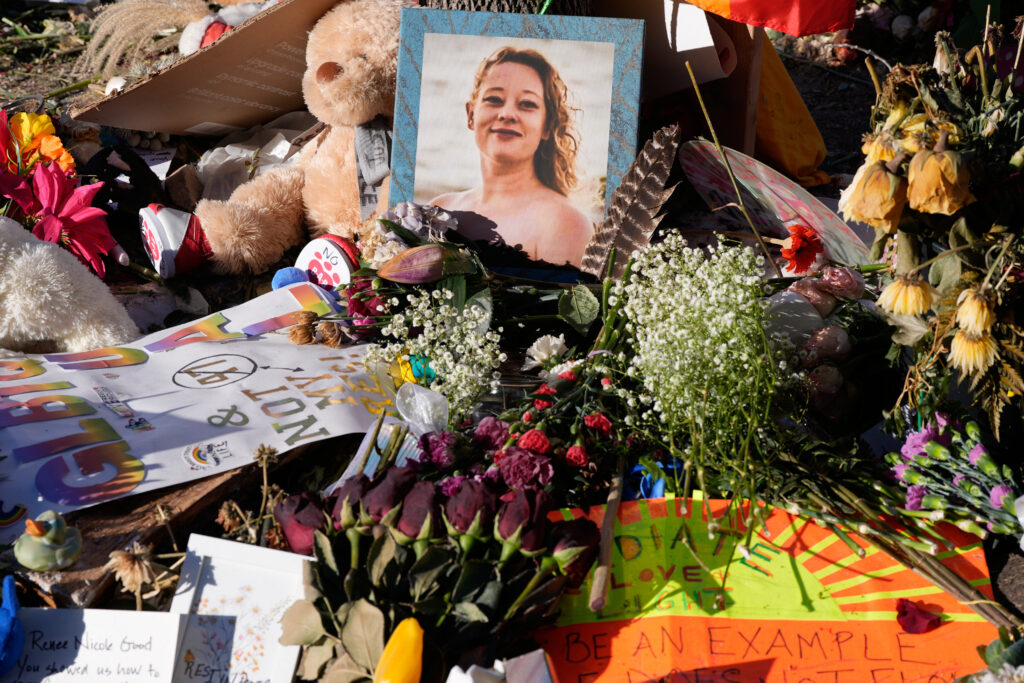
After Renee Good and Alex Pretti were shot to death by federal agents in separate incidents, Trump administration officials immediately tried to justify each killing by mischaracterizing basic facts about the victims, and demonizing and smearing them as “domestic terrorists” or insurrectionists. Both local and national journalism organizations worked to present evidence that proved the contrary and helped counter the government’s narratives before they could take root.
It’s not just local and national media covering the situation in Minnesota. Increasingly, social media influencers — touted by some as the future of journalism — have been out in force. Influencers from both left and right trooped into Minneapolis after the killing of Good, a mother of three who was shot by ICE agents at the wheel of her car. Her death triggered massive protests locally and across the country. Citizen video has played a role in the coverage, from bystanders who captured the killings of Good and, a week later, Pretti, an ICU nurse at the veterans’ hospital who was shot to death by Border Patrol agents. But also in the mix are a cast of influencers including a bearded “woke farmer,” a karaoke-singing entertainer in a giraffe costume and thong, and a grizzled left-leaning military veteran. There are also a host of accounts that appear to exist only to livestream residents being brutalized or tear-gassed.
In a way, influencers helped kick off this crisis. The federal incursion into Minnesota was emboldened after right-wing influencer Nick Shirley, who had been drawn to the state by Republican lawmakers, went viral in a video where he claimed that fraud was rampant in Minneapolis’ large East African immigrant community. He filmed himself knocking on the doors of Somali American daycare centers, purportedly to uncover misdeeds, which had already been under state investigation before his intervention.
Now, following weeks of strife caused mostly by the actions of federal agents, social media is full of spam accounts posting decontextualized and AI-generated clips of violence in Minneapolis, some of which seek to rationalize the Trump administration’s narrative for sending armed forces into an American city. Those posts may attract eyeballs — the currency of Instagram and TikTok — and inspire outrage, but they don’t show anywhere near the full picture: Mothers dropping off groceries for families forced into hiding, pro-bono attorneys desperately trying to find their clients, community members looking out for one another. That’s why local journalists are vitally important to the coverage.
It has become clear to me in covering this crisis that fact-based journalists need to distinguish ourselves from everything else online, including the superficial cable news pundits and influencers who don’t follow journalistic standards. In the era of AI, it’s no longer acceptable, if it ever was, for people who aren’t adhering to standards of accuracy or ethical practices to just quickly record and post, or repost, footage of dramatic confrontations without context.
Journalists need to be vigilant about verifying footage, adding background information and context, and explaining to our audiences why a particular incident matters. At its most basic, our job is to inform the public about what the government won’t tell them: what’s being done with their tax dollars, and in their name.
Most importantly, journalists need to be present and invested in our communities. Lately, that has meant freezing our toes off to cover the confrontations between ICE agents and residents, or getting hit with the tear gas or pepper spray federal agents routinely deploy. It also means building trust the hard way, one source and one story at a time.
I spent last year as a Nieman Fellow at Harvard University, where I joke that we got the chance to talk to some of the smartest people in the world who told us how hopeless the situation is for American journalism amid fading public trust and declining economic prospects. But I found inspiration, too, especially from Nieman Fellows from countries like Russia and Georgia, who persisted despite their own countries’ descents into authoritarianism, never giving up.
There’s so much handwringing about what we can do to save journalism. I’d argue that the answer is right in front of us: It’s about embracing our values and making sure the public knows what we stand for. Rather than asking them to blindly trust those who claim to be arbiters of objective truth, we should clearly tell people what we believe in and how our work is built on a foundation of fact, fairness, equity, transparency, and accountability.
The responses we’ve received from the public about our coverage make it clear that people want and appreciate journalists who hold power to account instead of cozying up to it. Access to community better serves our mission than access to power.
I’ve got a new gas mask, a bullet-proof vest, and shatterproof goggles to continue doing my work safely. But as the surge stretches into months, and federal authorities make it increasingly clear that they won’t hesitate to arrest or use force against people they perceive as opponents — including reporters — it has become obvious that journalists must either persevere or disappear alongside the communities we serve.