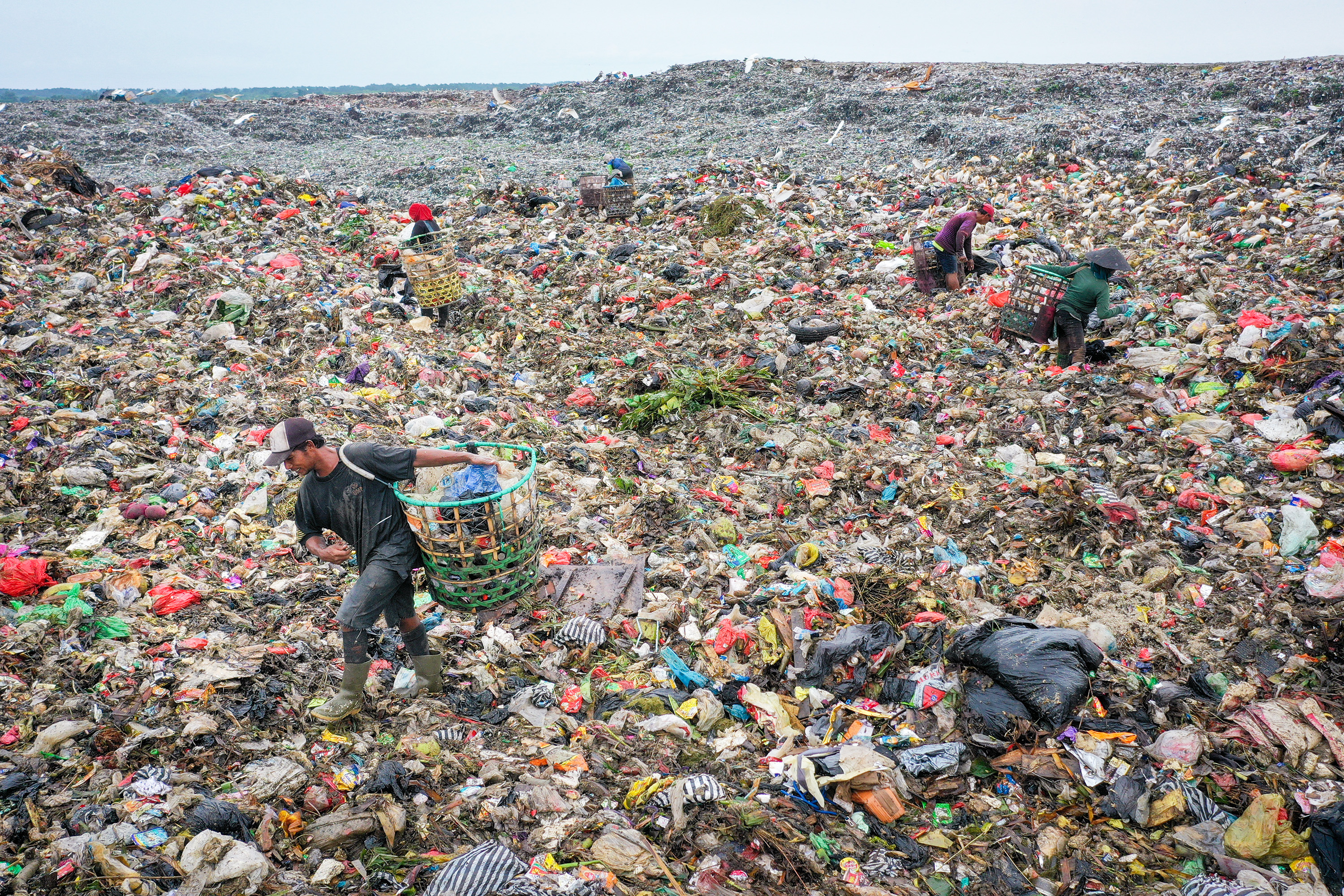
The ground shook beneath my feet. Flies swarmed my face in the oppressive heat, appearing also to tremble from the intense shaking as an excavator rolled past.
It was only in looking down at my feet that I remembered I was standing atop a mountain of trash, more than 35 meters deep.
A bead of sweat fell from my nose and splashed onto my camera, which I gripped tightly. Before me was a moonscape of waste — plastic and refuse in all directions as far as the eye could see.
For a moment, I was completely disoriented and struggled to catch my breath in the heat and overpowering stench. All I could do was raise my camera to my eye in an attempt to record the dystopian scene. Bali wasn’t meant to be like this, I thought, it was meant to be paradise.
A week before, I had been in the comfort of my home in Beijing, preparing on New Year’s Eve to welcome 2025. I was scrolling through my social media feed on my phone when a video stopped me cold: images of wave after wave of plastic pollution being deposited on a beach. These weren’t just any waves — but knee-high undulating streams of garbage. I wondered where this could possibly be and was stunned when I leaned in closer and read the caption: Bali, Indonesia.
As an environmental photojournalist, I am always on the lookout for stories, and I knew this was one I just had to cover. I booked a flight and arrived in Bali in a matter of days.
What I witnessed there was truly shocking. As a result of the rainy season, Indonesia’s polluted rivers were being flushed into the sea. The resulting waste was then washing back up onto the beaches.
In addition to the visceral horror of beaches covered in pollution, dead fish and other marine life, such as sea turtles, lay everywhere — all choked by plastic.
This was not the entire story, however. I started to investigate beyond the beaches, which led me to the TPA Suwung landfill, where I stood with my camera, swarmed by thousands of flies.
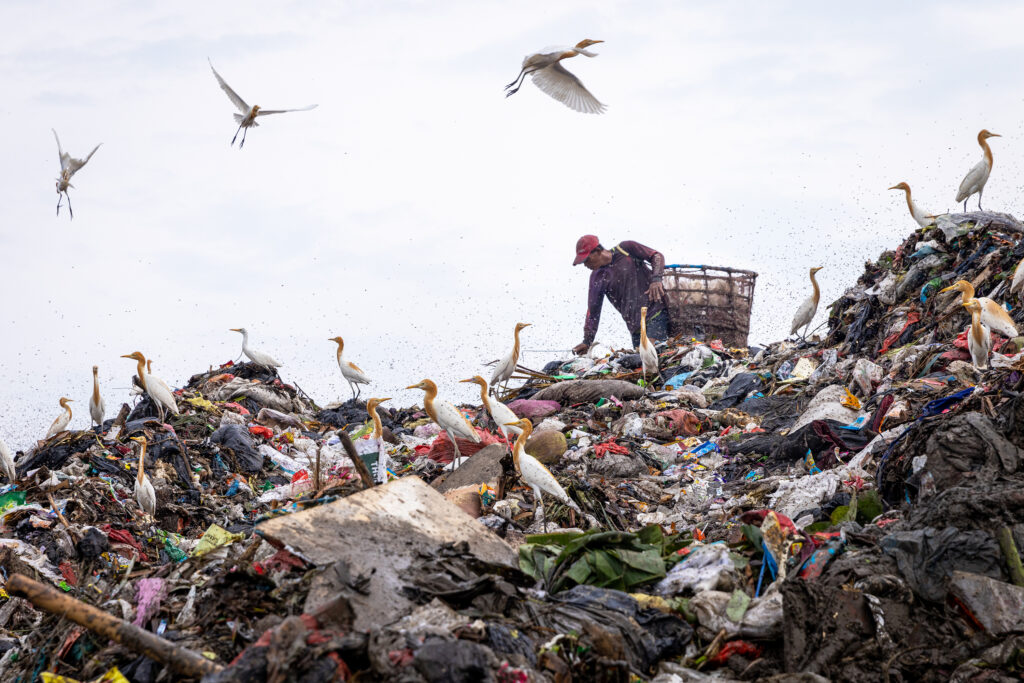
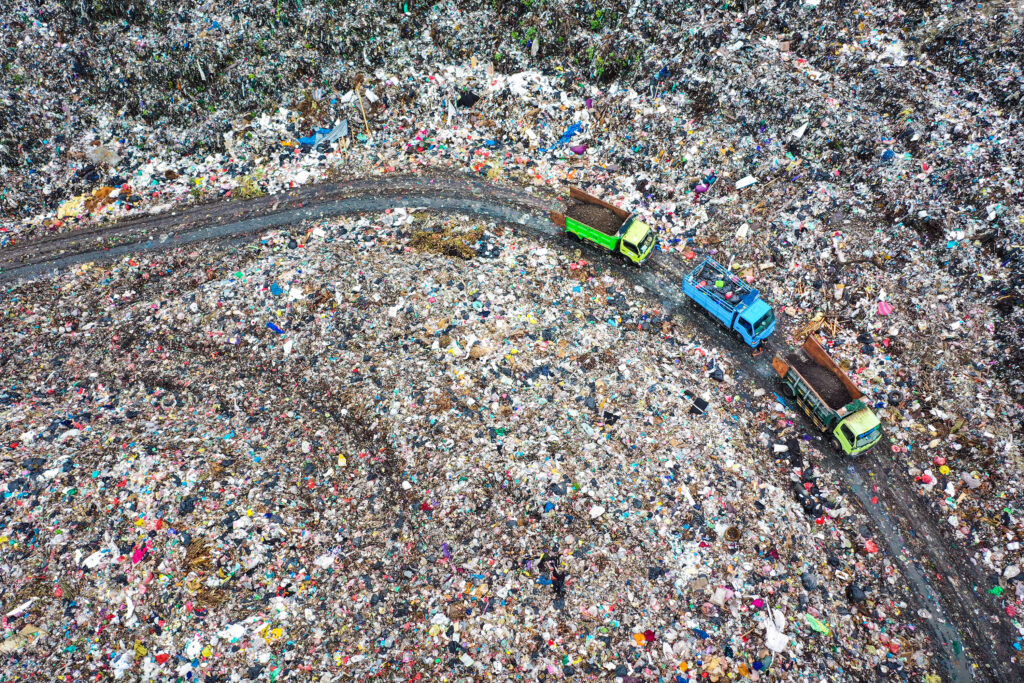
More than 6 million international tourists visited Bali in 2024, according to estimates, and 70% of the island’s economy is based on the hospitality industry. The island’s homes, hotels, restaurants and businesses all send their waste to this landfill, which has been receiving an estimated 3,600 cubic tons of garbage every day since 1984. These images were taken in January 2025. In July, the Balinese government announced plans to gradually reduce the amounts and types of waste that will be accepted at TPA Suwung.
But I had chosen to make photos at the landfill as part of the larger plastics story — to show the impact of such waste beyond the beaches. Bali’s landfill is directly connected to its popularity as a tourism destination; it is located in downtown Denpasar, very close to the island’s most popular beaches.
I spent an afternoon at the landfill, documenting general scenes and the people who spend their days there picking through the waste, searching for any items they might be able to use or resell. I flew a drone over the vast landfill area — which covers more than 32 hectares — in order to capture not only the enormity of its scale, but the human stories of the people wading through the garbage.
After a few hours at the landfill, I had to leave. It was an incredibly difficult place to make images. It was hot, dirty, and dangerous.
Visiting the landfill helped clarify my understanding of the true scale of the plastics crisis, not only in Bali, but also across wider Asia and around the world. I hope images like these help put this crisis into context and remind viewers of its reality and severity.