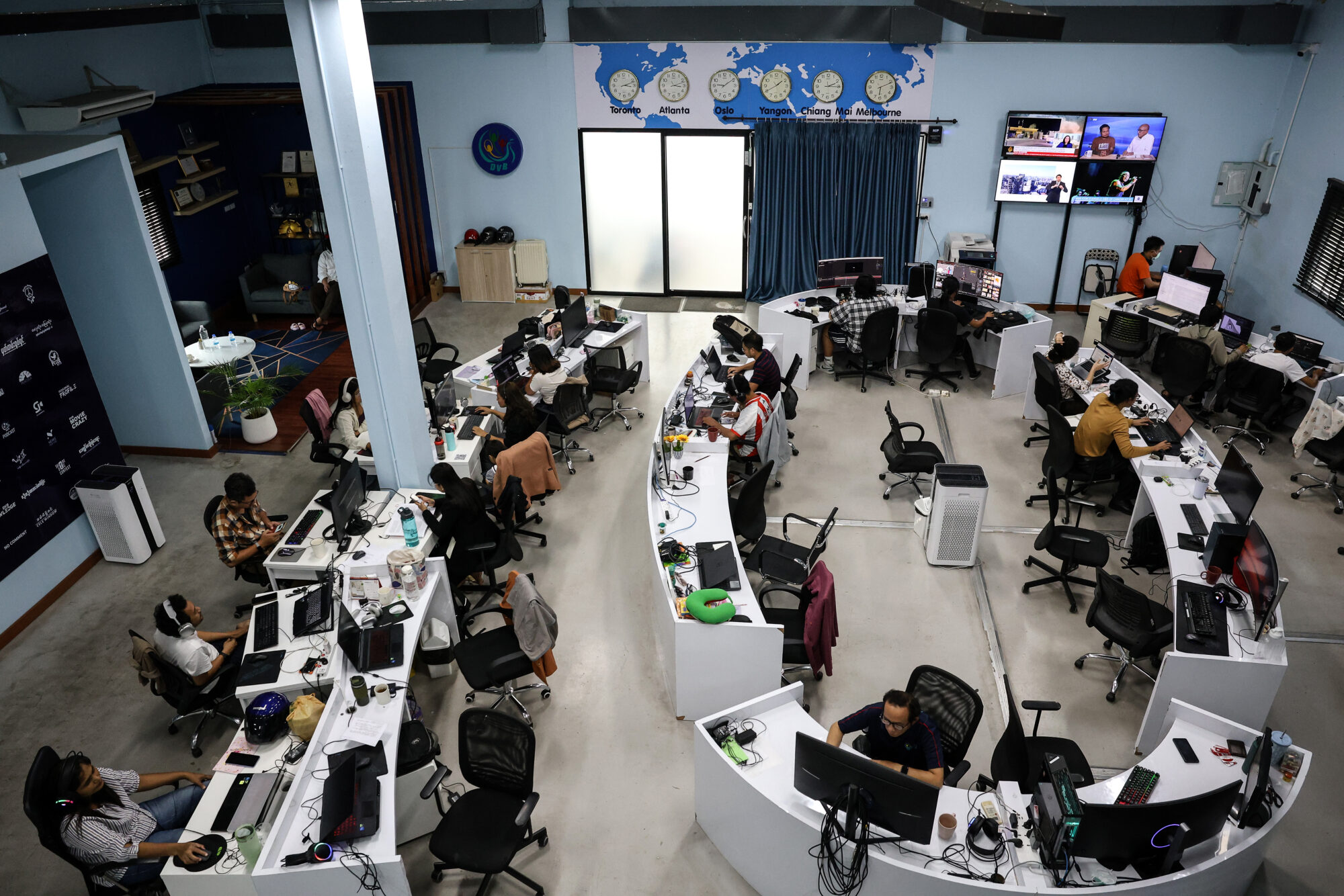
The swift loss of U.S. funding for global media since President Donald Trump took office a year ago has devastated journalism in many countries where the independent press was already on precarious footing.
This rollback of press freedom programs, as well as the loss of some funding from European nations refocused on security closer to home, has left exiled media outlets from Myanmar, Belarus, Afghanistan, South Sudan, and other countries that lack a free press facing the same question: When decades-long donors pull out, what comes next?
In a country like Myanmar, where journalists have been systematically targeted by the country’s military regime, the question is a matter of extreme urgency.
Myanmar now ranks among the world’s top three jailers of media workers, according to the Committee to Protect Journalists, alongside China and Israel. Free speech group Athan says the regime has jailed 223 journalists since ousting an elected government in a 2021 coup. At least 12 have been killed, and many tortured. And all this comes as the regime is planning what has already been condemned by international observers as sham elections — scheduled from late December through January 2026 — while continuing to systematically commit atrocities.
The military has launched a series of offensives to reclaim urban areas — moves analysts say are aimed at projecting control in an effort to legitimize the vote — while revolutionary forces dig in, vowing to disrupt the junta’s plans.
Despite an urgent need for comprehensive, independent coverage of these developments, the funding that sustained many media outlets in exile has been decimated, and the country’s most reputable media organizations, also operating largely in exile, have lost two of their biggest donors: the United States and Sweden. With up to 80% of their funding once coming from foreign sources, according to one outlet's estimate, the pullback has forced a dramatic shift in strategy.
Inside Myanmar, independent journalism has been largely extinguished in areas under regime control, where domestic news outlets function as instruments of state propaganda. Only in opposition-held territory do reporters retain any meaningful space to challenge the junta’s rule.
A new problem, a search for solutions
With an autocratic regime they oppose in control of the country’s economy, Myanmar’s independent media organizations have been desperately searching for new income sources. Domestic businesses are unlikely to advertise on their sites, as they would risk the regime's ire. The situation is causing additional insecurity for exiled journalists, who are already grappling with financial stressors, separation from their families (many of whom still face danger back home), and precarious legal statuses that can mean a risk of arrest in the neighboring countries where they have taken refuge.
In response, Myanmar’s large competing media outlets have taken measures that might have been unthinkable in years past: from forming an alliance to apply for funding, to establishing a "hot line" to share information on donors, collaborate on investigations, and tackle issues like website security. Several outlets report that cyberattacks have surged recently, with many traceable to IP addresses in Russia and China — both close allies of the regime. Outlets have shared content, and three have launched a joint readership donation drive. One even lent studio space to another.
“We can’t just cry out for not having funds,” said Aye Chan Naing, executive director of the Democratic Voice of Burma (DVB), adding, “It’s a tricky balance. …If donors spread their funds to everybody, nobody will be able to survive.”
This push toward realignment is playing out in a complex media environment. Just as many of those waging revolution have a desire to unseat not only the military, but also the entrenched power structure of the Bamar — the ethnic majority at the center of political control in Myanmar — the media sector echoes these tensions. With the Bamar leading Myanmar’s largest news organizations — most of which are in exile — some fear that efforts toward closer collaboration among the organizations could lead to a diminished role for smaller media outlets, many of which serve the country’s ethnic minorities.
Despite these reservations, Myanmar offers an interesting lesson in how media organizations are trying to persevere as they navigate a post-foreign funded world, forcing the kinds of creative solutions and new ways of thinking that could lead to interesting outcomes.
Myanmar’s media under siege
An estimated 64 of 73 independent Myanmar media organizations operate from exile — many based in neighboring northern Thailand’s Chiang Mai city, the de facto hub for Myanmar diaspora journalism.
According to a media development source who requested anonymity in order to protect staff and affiliated journalists working inside Myanmar, it would cost an estimated $8 million to $10 million annually to fund basic operations for about 50 of these outlets and keep the media running for the country’s 55 million people — a sum he called “peanuts.”
Foreign funding covered 40% to 50% of those costs in 2024; now it covers less than 25%.
“If that money gets smaller, people will live in the dark,” he said.
The lights started going out for many news organizations in March, when the Trump administration cut funding for Voice of America and Radio Free Asia, which ran Burmese-language services that bypassed junta censorship. Regime leader Min Aung Hlaing publicly thanked Trump for making the cuts, as part of a letter that also requested a reduction in a tariff of 40% on Myanmar exports to the U.S. In the letter, he characterized the funding cuts to media as necessary for “regulating broadcasting agencies and funds” that spread “one-sided misinformation and distorted narratives,” claiming the outlets had exacerbated conflicts in Myanmar and influenced the U.S. to impose sanctions on the junta.
The lights started going out for many news organizations in March, when the Trump administration cut funding for Voice of America and Radio Free Asia, which ran Burmese-language services that bypassed junta censorship.
The Trump administration’s cancellation of most of the contracts for the United States Agency for International Development (USAID) affected other media funders as well. Media development partner Internews had been set to expand its support of Myanmar media following the coup. It had gained approval for a $4 million, one-year extension to an $18 million contract that began in August 2020, aimed at helping “sustain access to information for the people of Burma in a critical time of increased vulnerability.” But the USAID cuts blocked a key source of funding for Internews, cutting off a large portion of the organization’s budget and forcing it to ask several Myanmar outlets to return part of the money it had already distributed. Concerned that failing to do so could jeopardize future funding, DVB said it returned nearly $14,000, most of it earmarked for freelance filmmakers. Other outlets were forced to stop paying salaries or cease operations entirely.
The drastic scaling back or closure of local outlets can have a ripple effect, because national and international media — including wire services that disseminate information across the globe — often rely on them for coverage.
Compounding the crisis of media funding cuts, Sweden announced in September that it would be ending development aid to Myanmar in 2026 — a loss of $2.4 million annually, according to Human Rights Myanmar — as part of a wider strategy to shift its financial support to Ukraine.
Forming an alliance
There are some potential bright spots, however. In several instances, the funding crisis has turned competitors into collaborators. Five major outlets — DVB, The Irrawaddy, Myanmar Now, Mizzima and Burma News International (a consortium representing 14 ethnic outlets) — all operating in exile, have found creative ways to address the challenges.
Although long considered rivals, many of Myanmar’s media outlets have entwined personal histories and shared bonds that have been forged throughout their country’s many upheavals. Several outlet founders and editors have been political prisoners; some resisted the junta together after a 1988 pro-democracy uprising. Myanmar Now’s co-founder Swe Win, who once worked with Irrawaddy founder and editor Aung Zaw, was shot in an attack allegedly linked to the military before relocating into exile. It’s because of these shared histories, Aung Zaw said, that they can all "relate to each other.”
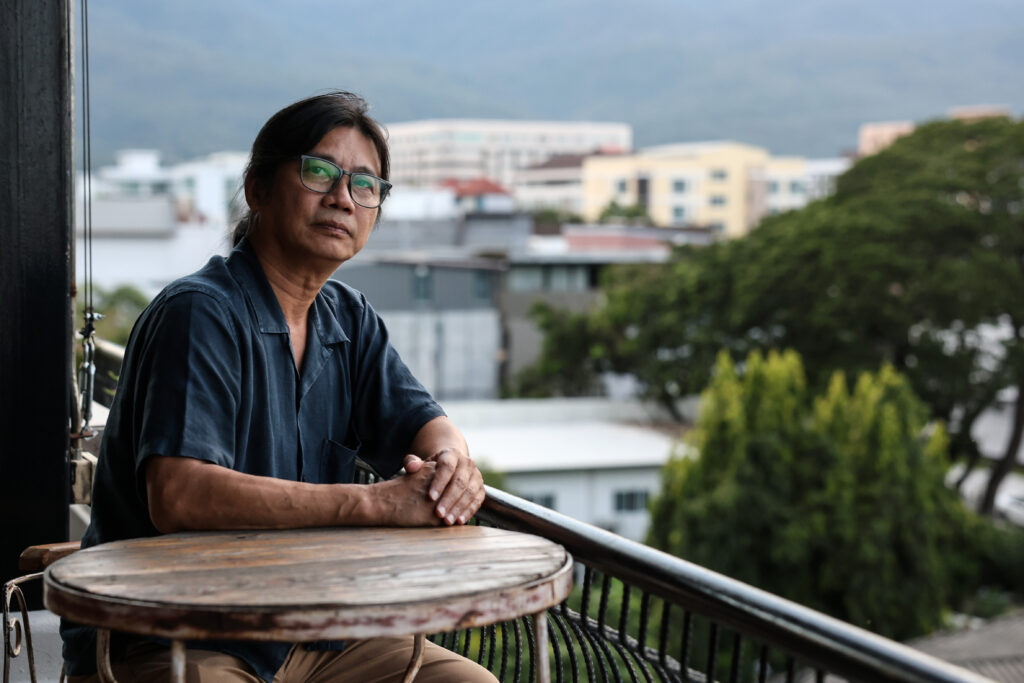
After funding was thrown into jeopardy, coordination between news outlets tightened. Several organizations signed a February 2025 joint memorandum calling for greater transparency in how donor funds were being spent, including a more detailed accounting of fees paid to unnamed media-development intermediaries — international nonprofits that administer donor grants, set budgeting and progress-report requirements, and provide training and technical support to local newsrooms. Editors said they wanted to see dwindling donor funds used as efficiently as possible. The memo also urged donors to provide ongoing, longer-term support for core operational costs, and to help outlets build revenue streams, rather than only offer project-specific grants.
“We have become more collaborative and have a more common voice,” Aung Zaw said. “Coordination is the way forward for media houses here.”
The five allied outlets also have applied together for European Commission funding, and have toured European capitals trying to drum up support despite the fact that, as DVB Executive Director Aye Chan Naing said, "everybody all over the world is going after European funding."
“We have become more collaborative and have a more common voice. Coordination is the way forward for media houses here.”
— Aung Zaw, founder and editor of The Irrawaddy
The editors have tried to make the case that funding independent media in Myanmar is in Europe's best interest, and that to challenge the regime is to challenge Russian influence in Southeast Asia. The junta counts Russia among its closest allies. Moscow supplies it with arms, technical training, and diplomatic cover, while the junta reciprocates with Myanmar-made mortar rounds, which have been used in the fight against Ukraine.
In addition to Russia, Myanmar’s junta-organized election has the backing of Belarus, China and other allies. The election will unfold in three rounds across up to 274 of Myanmar's 330 townships. A Dec. 9 International Crisis Group report said the law requires only minimal territorial control — just one polling station per constituency, even if located on a military base — for an election to be declared valid. Many eligible voters won't be able to cast ballots, even if they want to.
And analysts caution that the number of townships that will be covered is uncertain, as many areas remain contested or under the control of resistance forces.
With opposition parties banned and only military-approved candidates on the ballot, Western governments called the election an attempt by junta chief Min Aung Hlaing to cement his grip on power.
Exiled Myanmar media outlets will still cover the election, deploying reporters — often at grave personal risk — inside both regime- and rebel-controlled areas. On the ground, cooperation is informal and does not involve newsroom supervision. Instead, reporters from different outlets often trade tips and verify scraps of information. With their outlets’ licenses having been revoked by the regime, journalists covering events from junta-held cities risk arrest or worse.
Faltering revenue streams
Before the coup, outlets had already been trying to wean off donor funds by pursuing other revenue streams, including advertising on their news websites and social media. Broadcasters like DVB, which operates its own TV channel, also brought in income through video advertising.
Like many of its rivals, DVB has considerable reach – more than 3 million YouTube subscribers and 21 million Facebook followers. Aye Chan Naing said that in 2020, just before the coup, the company’s self-raised revenue reached 50%, with a goal of full self-reliance by 2025. That revenue plunged to almost zero after the coup.
Many editors also saw local advertisers abandon independent media following the coup, fearing reprisals from the junta. Platforms such as YouTube and Facebook embed advertisements into content, and share a percentage of revenue with publishers. In countries like Myanmar however — where, for example, Aye Chan Naing estimates over 80% of his outlet’s audience is inside the country — views earn almost nothing, because advertisers pay far less to show ads to people with low incomes and in countries where sanctions complicate financial transactions.
Paid subscriptions aren’t a dependable revenue source either. Even with cash, transferring any type of funds for donations or subscriptions from inside Myanmar is risky, as the regime often tracks financial transactions. And viewers who might encounter a paywall on DVB’s site, for example, can find similar stories for free on rival sites like The Irrawaddy, in practice denying DVB subscription revenue. Aye Chan Naing said this underscores why collaboration, rather than competition, may be a more sustainable financial model in the long run.
Meanwhile, crowdfunding amongst the diaspora increasingly means that media outlets are competing with other groups soliciting money to help the more than 3.6 million displaced people inside the country and civil servants who refuse to work under the junta and who “need the money more,” Aye Chan Naing added.
Tin Tin Nyo, the managing director of BNI, said that after the coup, “the whole media business collapsed.” Now, she added, if the remaining independent media outlets disappear, junta propaganda will quickly fill the vacuum. “They can manipulate and brainwash the people,” she said.
Smaller outlets face additional obstacles
Sai Kham Phu, the managing director of the Shan Herald Agency for News (SHAN), said the recent push for collaboration between outlets is being led largely by Bamar-dominated organizations. Sai Kham Phu, who is Shan — one of Myanmar’s largest ethnic minority groups, largely concentrated in the country’s hilly eastern area along the borders with Thailand, China and Laos — said this poses a potential problem with the collaboration, as dismantling Bamar power structures is a big issue in the current civil war sparked by the coup. He added that donors must understand the dangers of supporting “Burmanization” — a term used to describe the imposition of Bamar culture and language on Myanmar’s ethnic minorities at the expense of their own identities.
“Aren't we fighting for equality and federal democracy?” Sai Kham Phu said. "Are we hypocrites? Donors should see there are many layers, and think about equality and equity, otherwise you support Burmanization."
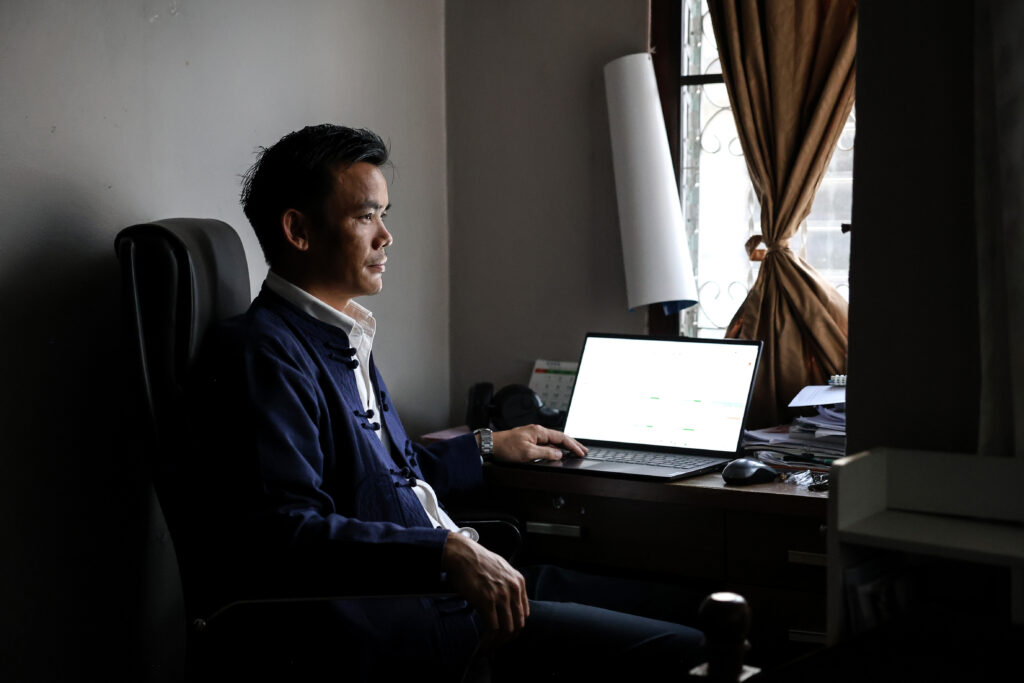
SHAN, a Burma News International member, has a membership program that accounts for 5% of its budget; the rest is funded by donors. It has already had to cut its freelance budget and money for events, but Sai Kham Phu views staff layoffs as a last resort.
"We can't send them back, we have an obligation to protect them,” he said, adding that most of SHAN’s staff members are under 30 years old, and laying them off would subject them to possible military conscription back home.
It’s not only smaller, ethnic-minority outlets that are worried about donors favoring collaboration among larger outlets. Hmue Eain Zaw, an ethnic Bamar editor of New Day Myanmar, said smaller outlets like his support an important ecosystem for developing talent, and often break stories before national and international outlets amplify them.
“All of those new entries will be jobless. It’s like cutting out a generation of journalists,” he said. “We’re the foundation of the industry.”
Detained for a week in September 2021, Hmue Eain Zaw recalled fleeing to Thailand after the regime threatened to kill him if he continued reporting. Now, forced to slash salaries, he runs his outlet with three volunteers who work side jobs in meal preparation and delivery just to get by.
Thu Rein Hlaing, managing editor of Dawei Watch, runs a team of 10 covering the southern Tanintharyi region, part of Myanmar’s rich landscape of multiple ethnicities and identities that shape the need for localized outlets.
SHAN reports in the Shan language, for example, as well as English and Burmese. Outlets that cover the Karen, who account for about 7% of the population, know the complex networks of Karen armed groups best. Thu Rein Hlaing conducts interviews in the local Tavoyan dialect.
"If you interview in Burmese, the interviewee might not talk about everything. Using the mother tongue makes it more familiar,” he said.
Though “in theory [collaboration] is quite worrying,” Thu Rein Hlaing said he’d welcome national outlets outsourcing investigations at the local level, as well as sharing resources, "if it's done fairly."
"Sometimes it's not about big or small; it's about specialization," he said.
BNI’s leaders try to counter fears of Bamar dominance by emphasizing that they publish in 10 languages and reach 14 million readers. News organizations such as The Irrawaddy assert they also reflect Myanmar's diversity and sympathize with smaller outfits, which they would not “neglect or ignore,” according to Aung Zaw.
But there’s only so much the larger outlets can do as they weather their own storms. U.S. cuts wiped out 35% of The Irrawaddy’s budget. It took cuts less than that to force the Tachileik News Agency to shut down. BNI, which lost 20% in U.S. funding, had to cancel some radio programming and is trying to help other hard-hit members survive through year’s end.
"For 2026, everything is uncertain," Tin Tin Nyo, BNI’s managing director, said. “I’ll keep advocating to other big media to think how we can help other media. But since we can barely survive ourselves, how can we help?”
The donor perspective
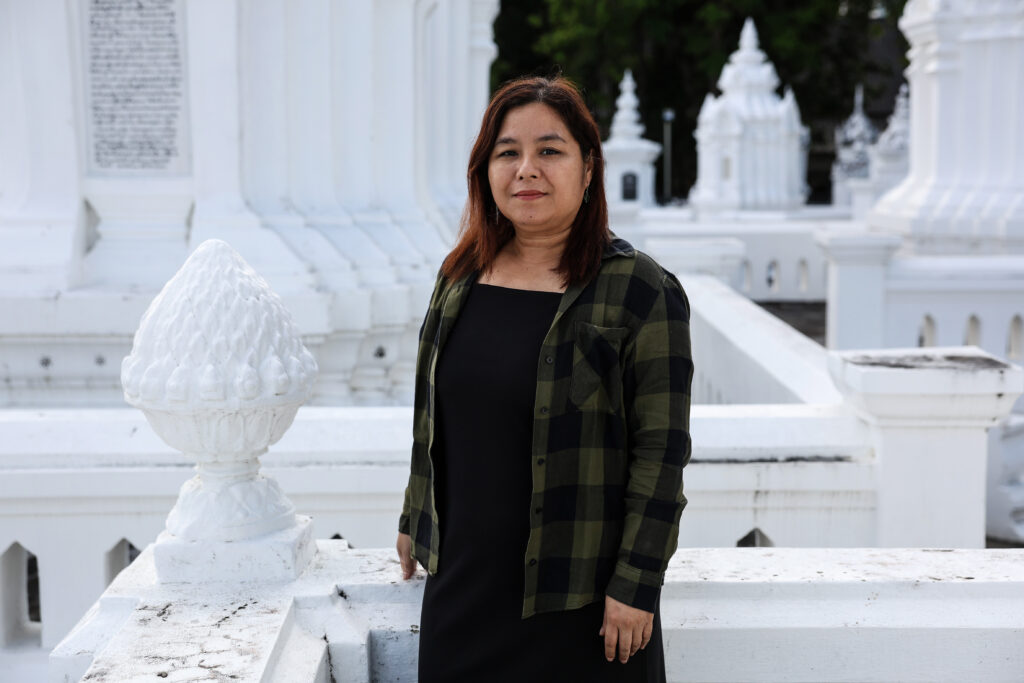
Thomas Bärthlein, project manager for DW Akademie, the arm of Germany’s public broadcaster Deutsche Welle that trains and supports journalists worldwide, says Myanmar’s exiled independent media is "a unique case that deserves special support," because the country’s people rely so heavily on it. DW Akademie gives a high proportion of its funding directly to local media outlets, mostly to help fund salaries, according to Bärthlein.
While excluding smaller outlets from collaborations isn't the solution in Bärthlein’s eyes, some consolidation may help those that are too small to report in-depth on their own. "But it's very difficult for us to say how they should behave and work," he said. "We have a global challenge: People don't know how to fund media anymore.”
"For 2026, everything is uncertain. I’ll keep advocating to other big media to think how we can help other media. But since we can barely survive ourselves, how can we help?”
— Tin Tin Nyo, managing director of
Burma News International
Bärthlein believes that the best way forward lies in attracting more funding from democracies. Exiled media should also strengthen ties with their communities, he added, and make it clear to their audiences that “we are doing this for you, and you can be part of it."
The media development source, who had requested anonymity, likened the situation in Myanmar to Syria, where exiled and independent media shrank — after a short-lived burst of expansion around 2011 that dovetailed with a popular protests against the regime — from dozens of outlets to just a handful, amid funding shortfalls and the civil war. Such a drastic contraction of the media ecosystem, he said, can have consequences that go beyond people not being able to get news. The absence of fact-based reporting can disrupt humanitarian and developmental assistance networks that often rely on local reporting for operations and analysis. "It's a life-saving tool for many," he added.
A historic inflection point
Most editors of Myanmar’s independent media organizations agree this is the most serious funding crisis they’ve ever faced, and it’s happening at a historic inflection point that could result either in decades more of dictatorship — or a crisis for the military that leads to an opportunity for change.
But the ongoing war, punctuated by regime atrocities, is already being severely underreported. If media funding collapses entirely, the conflict risks disappearing from the historical record.
Myanmar journalists, long accustomed to threats and persecution, are determined to keep going.
"It’s a testing period for all of us,” Aung Zaw said, adding that he, like many others, has struggled hard for a decade, holding several jobs in order to keep doing journalism. “We've been through it.”
His publication has endured previous storms, from periodic funding droughts since its founding in 1993, to navigating the transition from print to digital while surviving censorship bans under prior regimes — including a period when people caught in Myanmar with a copy of the magazine faced arrest. But they keep going.
“The regime is already gleefully waiting for our collapse," Aung Zaw said. "But we won't collapse. We will continue."