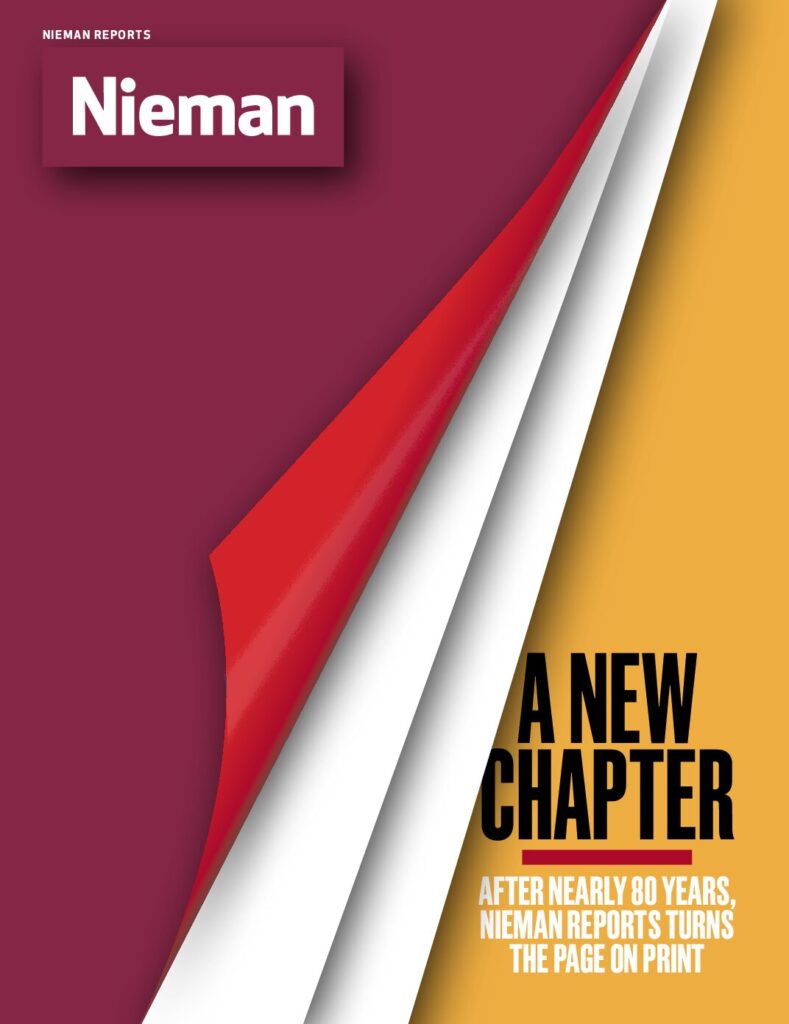
The Fall 2025/Winter 2026 edition of Nieman Reports represents the magazine’s final print issue as it transitions to an all-digital format. A combination of factors — many of which are affecting the wider media industry — has resulted in the move to online-only following a nearly 80-year run in print.
There’s much to think about and enjoy in this new print edition of Nieman Reports, and even more online. The issue examines challenges and trends in the news industry in the United States, France, Myanmar, Nepal, and Sudan, while our cover story looks at the evolution of Nieman Reports.
The same great journalism about journalism that readers have come to expect from the magazine will continue at niemanreports.org. In fact, it’s been appearing there for years already, including stories that don’t make it into print. Despite the changing format, our commitment to global media coverage remains as strong as ever.
I am both deeply suspicious of, and fascinated by, astrology. I have examined my birth chart intensely at various points in my life, not because I believe the planets govern my destiny, but because the impulse to look — to search for meaning in a symbolic map — says more about me than the stars ever could.
I eventually understood that this urge had nothing to do with astrology. Long before I knew what journalism was, I was paying attention, one of the profession’s most basic tenets.
In the end, a deep-seated instinct to wander and wonder, plus a series of happy accidents mixed with hard work, explain how I became a journalist.
That instinct arrived early. The first time I felt it I was on a pink bicycle.
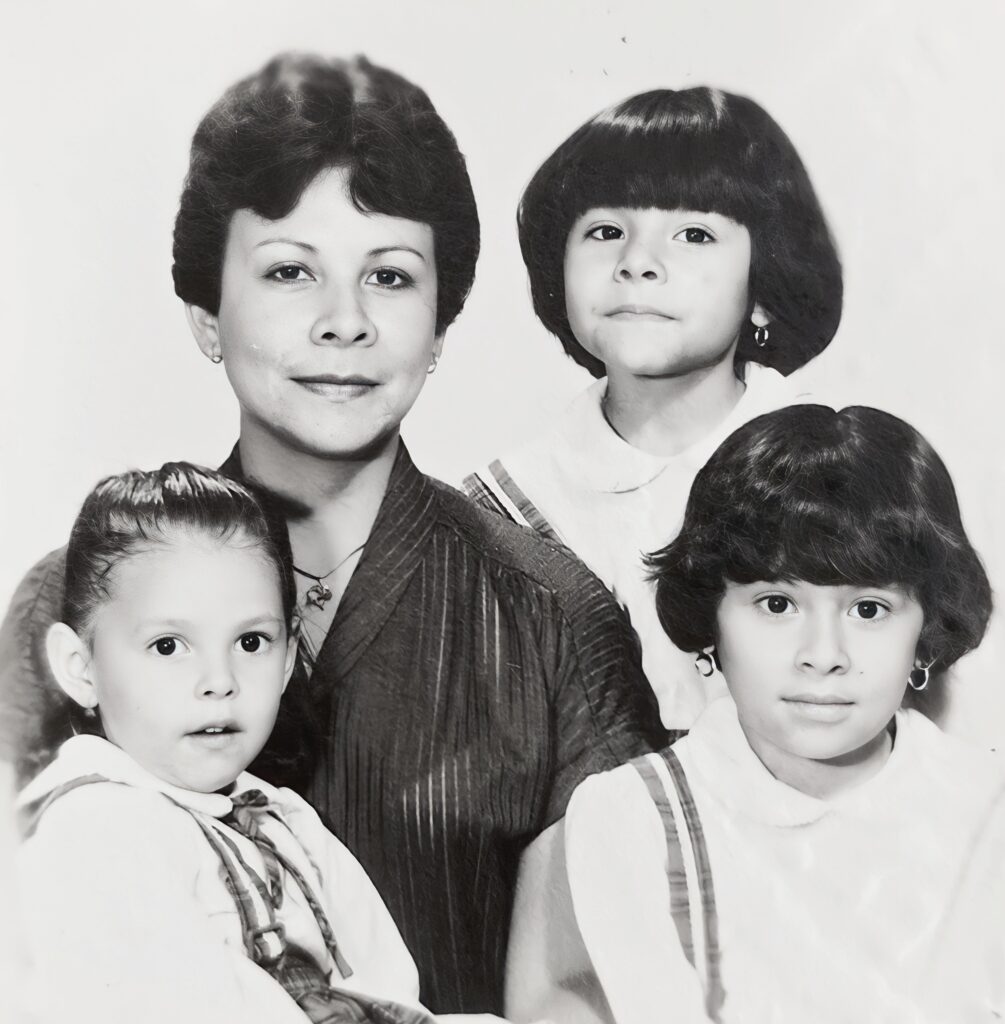
I grew up in downtown Monterrey, Mexico, the middle child of three girls living in a loud, busy, and rough urban neighborhood. Neither of my parents had bikes or even knew how to ride one. But a boy I liked did, and so did his sister. I watched them fly down the street, disappear around corners, exhilarated. They had things I didn’t have: independence, mobility, access.
When I asked for a bike at about 11 years old, my parents thought it was absurd. My sisters weren’t interested at all. Still, that Christmas, Santa delivered a pink bike with a white basket. It was totally unexpected. Later, I learned my mom bought it herself.
It was the best gift I could have received. The bike unlocked something in my brain. It was my mom signaling that she trusted me to go places.
A few years later, my dad gave me a sort of unintended gift: a love for reading.
My parents didn't go to college. They never read us bedtime stories as children because books weren’t part of their own childhoods. But my father read voraciously. When I was 14, I overheard him warning my mother to keep the novel he was reading out of reach. He didn’t want his daughters to get hold of it by accident.
Naturally, I made it my mission to immediately find and read the book. It was Sidney Sheldon’s “If Tomorrow Comes,” a melodramatic thriller featuring a woman who survives betrayal, prison, and violence before reinventing herself on her own terms.
The adult content was the point of entry, but what stayed with me was something else: the recognition that fiction stories contained meaning and that women could occupy the center of narrative gravity.
When my father discovered what I was reading, I could tell he was slightly proud. And he fed my new habit. We read every Sidney Sheldon novel published.
By my teenage years, I was obsessed with books. But I didn’t know how to turn that obsession into a career.
A deep-seated instinct to wander and wonder, plus a series of happy accidents mixed with hard work, explain how I became a journalist.
Higher education was nonnegotiable in our household. All three sisters would go to college. In Mexico’s system, you choose a field before you enroll, and changing your mind basically means starting over. I chose economics almost casually, intrigued by the forces then shaping Mexico: Technocrats were in power, and the North American Free Trade Agreement was in the air.
It would take me three years to admit I hated it. Not just the heavy math involved but the abstractions: people reduced to variables, behavior to equations, and human motivation to neat curves on a graph. I felt trapped in a five-year commitment that I didn’t know how to escape.
The relief came through writing — specifically, a literature class taught by a notoriously difficult professor. For the final paper, I procrastinated until the last few hours before it was due. The assignment was to pick three readings from the syllabus, identify a theme they shared, and write an essay reflecting on it. I finally found a common thread, and I remember feeling energized, high on the joy of having figured it out at the last minute, all by myself.
The literature professor gave me an A-plus, noting it was the best paper he had read in a long time. I was hooked on that feeling.
That exercise gave me the first real taste of the joy that comes from making sense of scattered information, pulling threads together until a narrative snaps into focus.
A year before graduation, by sheer chance, I landed a part-time job as a news assistant for an American journalist in Monterrey. I conducted interviews, transcribed tapes, and attended press conferences. I learned how to be a journalist.
I also learned what journalism costs in Mexico — the danger, the silence, the compromises. By the time I graduated, I knew I wanted to be a journalist, but not there.
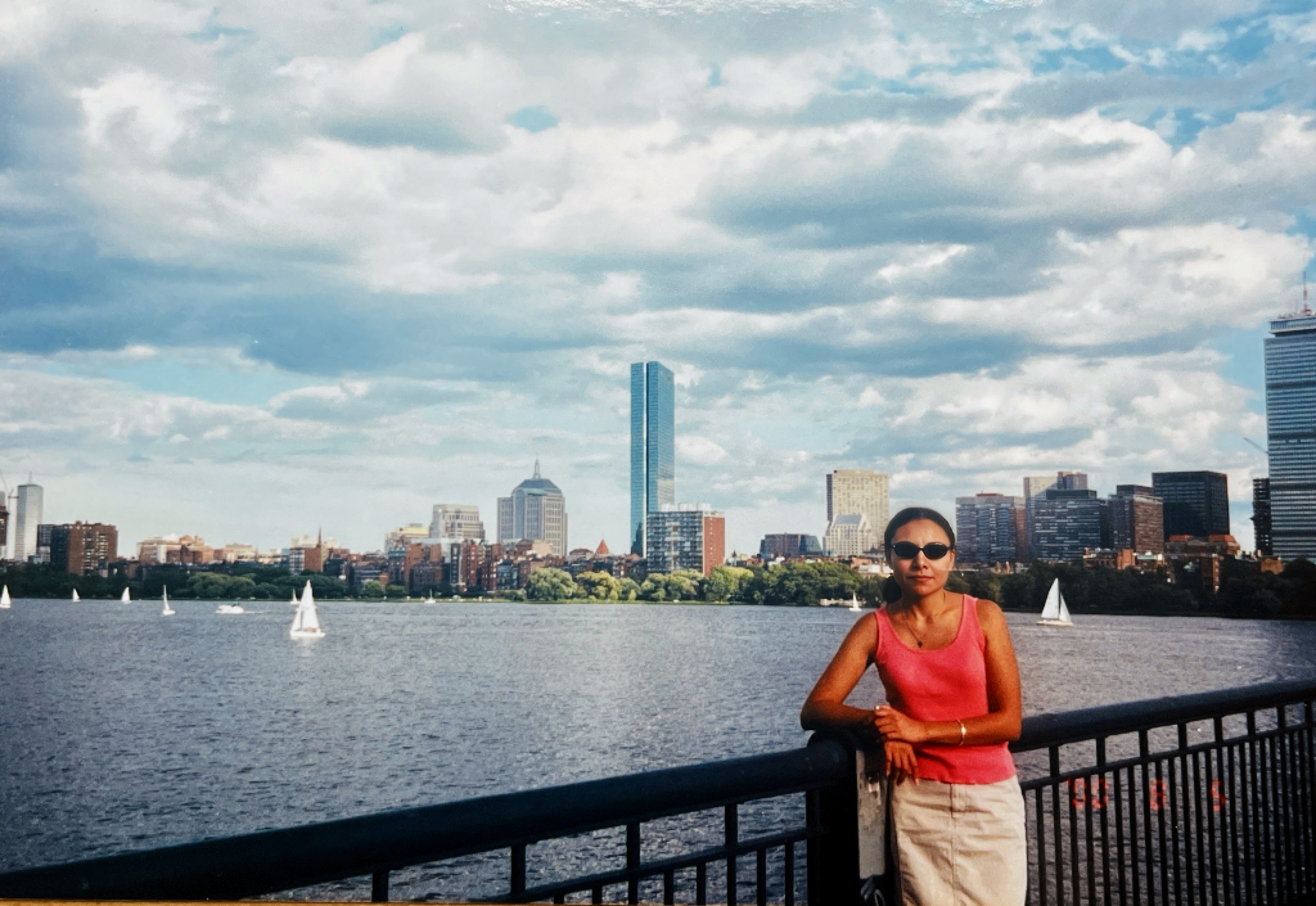
So, I left and moved to Boston two decades ago. I enrolled in the Harvard Extension School and earned a graduate degree in journalism. I entered the profession through Spanish-language media, immigrant communities, underfunded newsrooms doing urgent work with limited resources. That work taught me that truth tends to live close to the margins, far from spectacle.
Everything that followed, including my work as a columnist at The Boston Globe, came from that foundation. So did my understanding of whose stories matter.
A large part of that understanding comes from my mother.
Her example shaped how I see work, risk, responsibility, and possibility. She modeled the instinct to keep trying, to stay curious, to move even when the path wasn’t clear.
If I had to use a word to describe her it would be intrepid. She was trained as a secretary and taught us shorthand and typing, turning speed and precision into games. She sold Avon and Tupperware, took language classes, did aerobics, opened and closed ventures. What others saw as inconsistency was, in fact, an instinct for exploration.
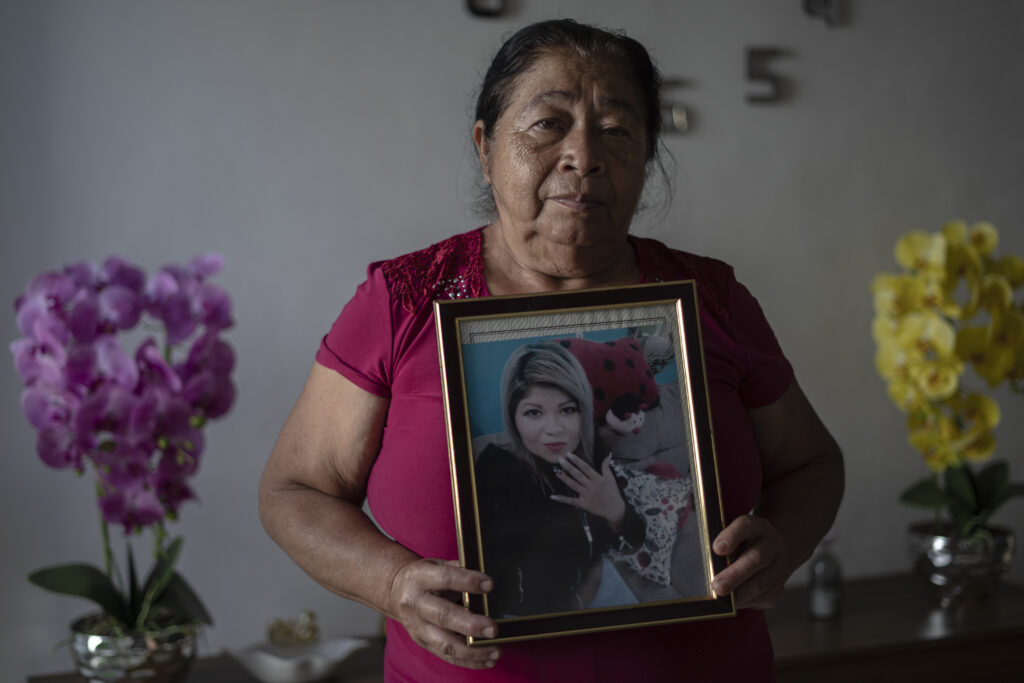
She is the reason I’ve become passionate about documenting the lives of undocumented immigrant women — women like Rosa, who cleaned the Globe offices, or Reina Carolina, whose disappearance exposed the cracks in Boston’s care for immigrant communities.
I recognize my mother’s courage in women like them who carry entire worlds on their backs while the rest of society barely notices. I think I do what I do because I was raised by a woman who taught me that even ordinary lives contain extraordinary truths and that those truths deserve to be acknowledged and preserved.