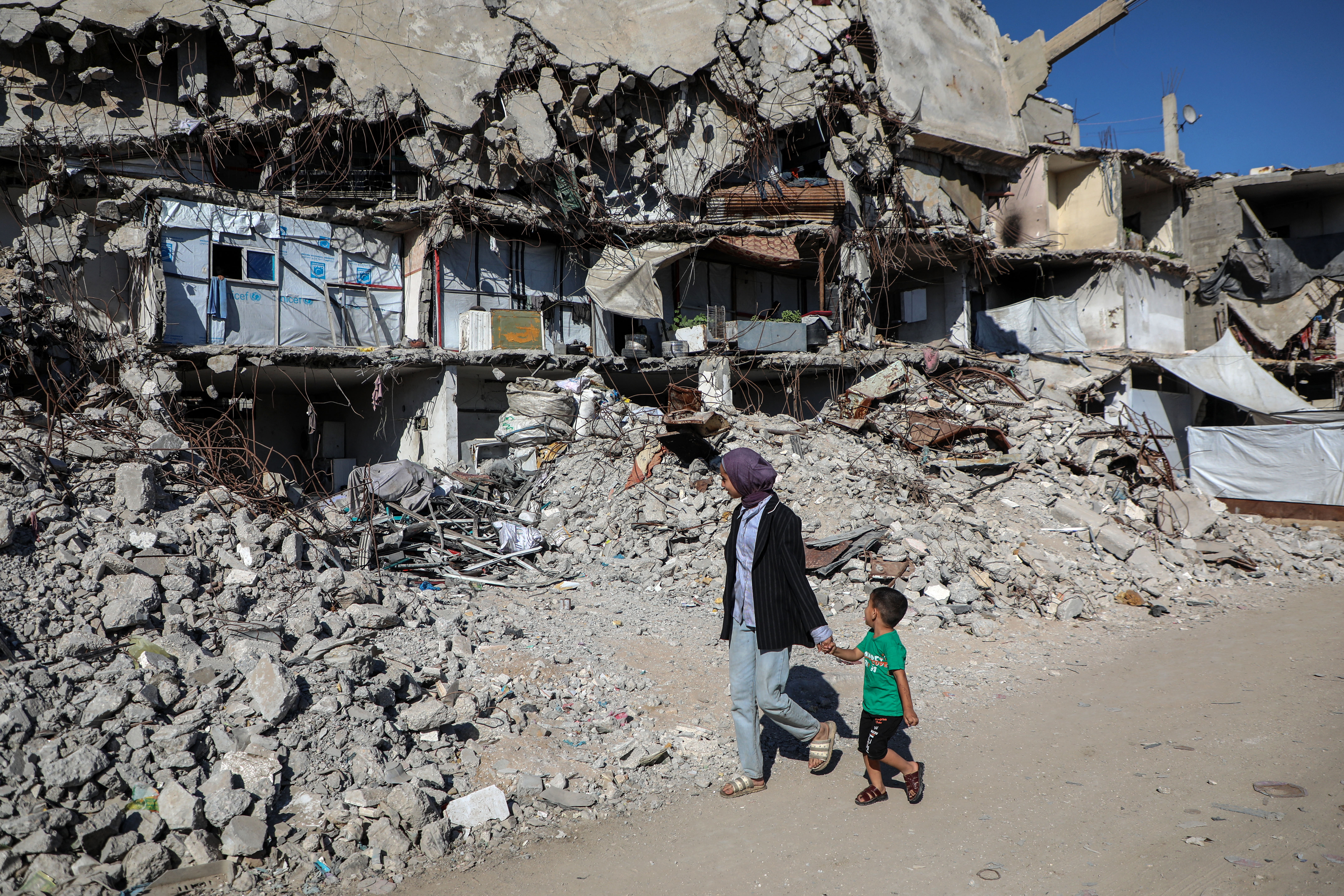
When the war began, I was in Cairo. Like thousands of other Palestinians from Gaza who happened to be outside the strip, I suddenly found myself unable to return home. Overnight, I went from reporting on Gaza as someone who knew its streets, rhythms, and people intimately to relying almost entirely on mediated forms of access: news reports, social media, and daily phone calls with my family.
Those calls were never just conversations. They always began with the questions any daughter would ask: Are you safe? Have you eaten? Where are you now? But they often continued with the questions of a reporter. Which neighborhoods had been hit? Were people able to communicate? Had anyone managed to reach the hospital? What were people saying that hadn’t yet appeared in the news?
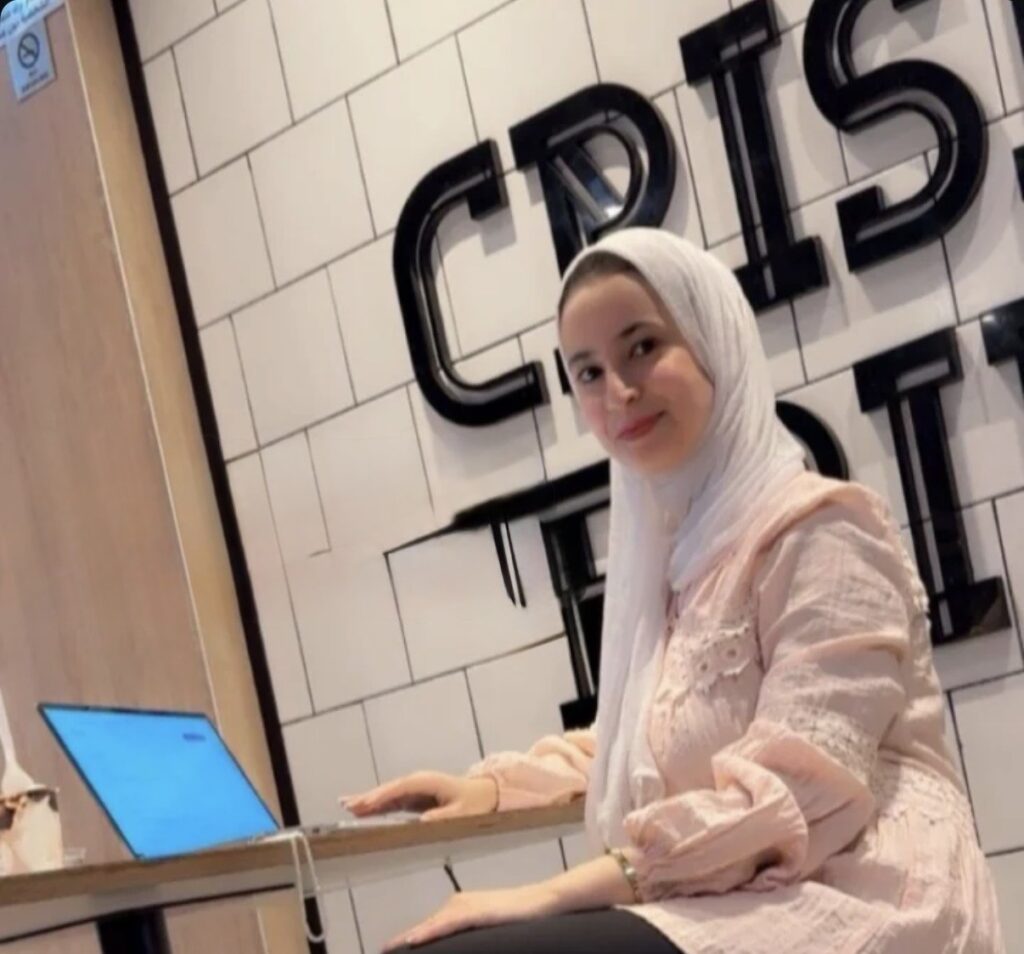
Over time, I realized that my family had become more than the people I worried about most. They had also become the bridge between me and a place I could no longer witness myself.
That realization raised questions I had never confronted before. When does a conversation with your mother stop being a personal call and become part of your reporting process? How do you balance the responsibility to document events with the responsibility to protect the people you love? And what does it mean to report on a war when your most trusted sources are also living through its consequences?
The experience also changed how I understood information itself. News reports could tell me that communications had collapsed or that fuel was scarce. But my family’s calls revealed crucial nuances those headlines could not capture: how people adapted when they could no longer reach one another, how rumors spread in the absence of reliable communication, and how everyday decisions became shaped by shortages that can’t be captured in a news brief. I realized that facts alone rarely explain how a war is lived. They need context, and for me much of that context came through conversations that were never intended to be interviews.
When I returned to Gaza, I quickly realized that reporting was no longer just about finding sources or verifying information. It was also about navigating the same conditions shaping everyone else’s lives. Recently, an airstrike landed near where my family and I were staying. Instead of hearing about the attack through a phone call or reading an alert, I experienced the confusion, the fear, and the uncertainty as they unfolded around me. It reminded me that I was no longer reporting on events from a distance — I was living inside them. The story was no longer something I pursued. It had become the environment in which I lived and worked.
That shift affected even the smallest reporting decisions. In Cairo, I worried about confirming information from afar. In Gaza, I often found myself asking a different question: Could I safely reach the place where the story was unfolding? Physical proximity to events did not always make reporting easier. Sometimes it made decisions more complicated.
The practical challenges of working also took on an entirely different meaning. I began organizing my reporting, translation work, and every deadline around the few hours when electricity or an internet connection might be available. Charging my laptop became a prerequisite for doing journalism. More than once, I found myself watching my laptop’s battery percentage as closely as I watched the news. In those moments, journalism depended as much on electricity as on reporting. A scheduled interview depended not only on whether a source was available, but on whether electricity returned in time, whether I could recharge my devices, and whether an internet signal lasted long enough to upload notes or send a completed draft before disappearing again.
Even reaching people became part of the reporting challenge. Arranging an interview was no longer simply a matter of scheduling a meeting. Sometimes both the reporter and the interviewee wanted the conversation to happen, yet circumstances made it impossible. With little fuel available, few vehicles remained on the roads. Donkey carts became one of the few available means of transportation, while damaged streets and the intense summer heat turned even short journeys into exhausting ones. Reaching a source often required calculating whether either of us could physically make the journey at all. Logistics became part of reporting in ways I had never experienced before. These obstacles were not separate from my reporting. They shaped what I could witness, whom I could reach, how quickly I could verify information, and ultimately, which stories could be told.
Living through these realities has also made me rethink a longstanding journalistic ideal: the value of emotional distance. Journalism often teaches us that some degree of separation from the story helps preserve clarity and objectivity. My experience has not led me to reject that principle, but it has made me question whether distance is necessarily the only path to understanding.
Journalism often teaches us that some degree of separation from the story helps preserve clarity and objectivity. My experience has not led me to reject that principle, but it has made me question whether distance is necessarily the only path to understanding.
Reporting from outside Gaza gave me space to analyze events, verify information, and see the broader picture. Neither perspective, inside or outside, was complete on its own. Each revealed something the other could not. Reporting from within Gaza gave me an understanding of how people navigate uncertainty hour by hour, how decisions are shaped by circumstances that rarely appear in headlines, and how easily important stories can be overlooked simply because they have become part of everyday life.
The experience also reminded me that access is not only about being physically present. It is about whether you can reach people, communicate safely, move through your surroundings, and earn enough trust for others to share their experiences with you. In a place where electricity, internet, and transportation are all uncertain, access becomes fragile, and journalism becomes an exercise in persistence as much as observation.
I also came to see that the most difficult ethical questions in conflict reporting are not always about verification or attribution. Sometimes they are about relationships. I still think about those phone calls from Cairo and wonder whether I was asking too much of the people I loved most. Looking back, I realize they taught me one of the hardest lessons in journalism: Information is never separate from the people who carry it. Every piece of information came from someone who was not simply witnessing the war but surviving it.
I still believe in verification, fairness, and professional distance. But I have come to understand that reporting on conflict also requires acknowledging the realities that shape a journalist’s ability to work. We are not outside those conditions; we work within them. Recognizing that does not weaken journalism. If anything, it makes us more conscious of its limits and more honest about what it takes to tell a story.
Today, I no longer need those phone calls to understand what is happening outside my window. Yet they remain the foundation of how I think about journalism. They taught me that the greatest challenge was never simply reaching the story. It was recognizing that every story is carried by people before it reaches a reporter — and that our responsibility is not only to verify information, but also to understand the circumstances in which it is gathered.