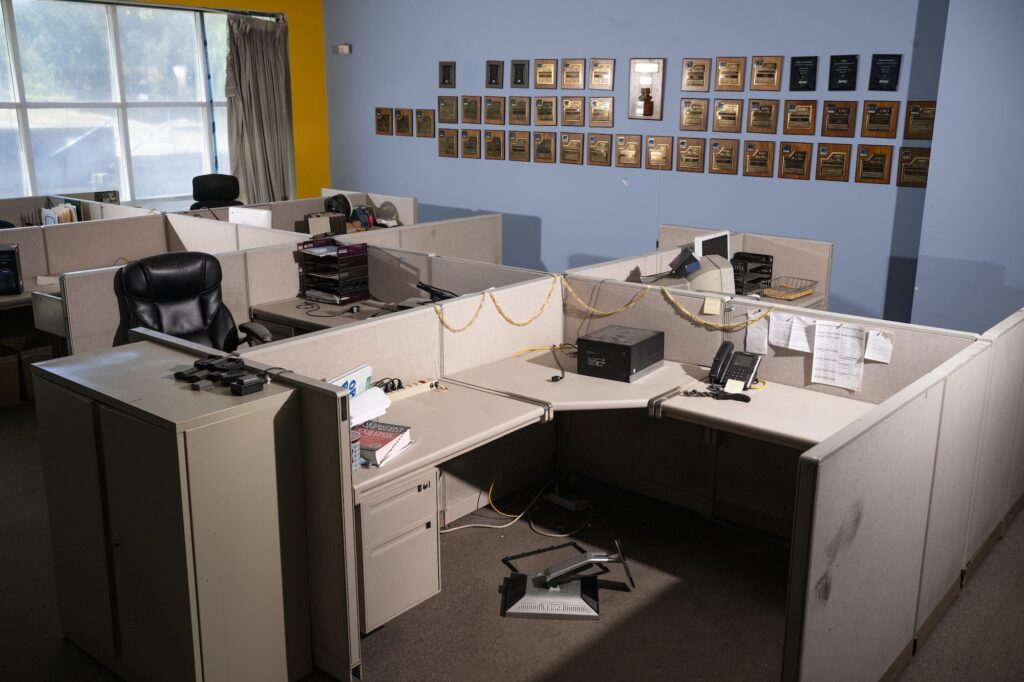
For many journalists, the sight of empty desks is a sadly familiar one. My first glimpse of a gutted newsroom facing further cutbacks sparked a documentary photography project that has so far taken me to more than 50 newsrooms across the United States over the past eight years.
It began when my mother, a loyal subscriber to our local metro in southern Illinois, told me a decade ago how disappointed she was in the newspaper. She complained that the local coverage was lacking, and the paper seemed to be thinner. Already several years into my photojournalism career, I was unsurprised by her remarks — I had been witnessing the decline of print media since graduation from journalism school. Still, my curiosity was piqued, and I arranged a visit to the paper to see for myself.
Cue the scene of a barren newsroom. Not only were there empty desks, but also an expanse of exposed carpet with indentations showing where desks had once long stood.
While there has been a great deal of reporting on the issues plaguing local journalism, I hadn’t seen the story told visually. It dawned on me that if I could show my mother what her local newsroom looked like now, she would immediately understand what had been lost — not just in my hometown, but across the country.
Many of the newsrooms I’ve visited for this ongoing project still put out a print edition, even as printing presses are shuttering across the country. I know the romantic nostalgia of newsprint won’t save or sustain print journalism, but the need for local news outlets remains. Whether print or digital, they are vital to their communities. Without robust local watchdogs, government waste goes up, damaging rumors on social media go largely unchecked, and city council and school board meetings take place without witness or scrutiny.
It dawned on me that if I could show my mother what her local newsroom looked like now, she would immediately understand what had been lost — not just in my hometown, but across the country.
My project is a love letter to local news, and a document of a fading era in print journalism. I hope these images remind us of the vital need for trusted local news, and give us a sense of what has already been lost and what is at stake.
The Appeal-Democrat
The nearly empty newsroom that launched this project was unfortunately not the last of its kind I would visit. The Appeal-Democrat’s newsroom embodies the constant cutbacks happening in local news. It once housed over 100 employees, and is now down to just three editorial staffers. Though the coverage is less robust than it used to be, the newspaper could not be more vital. It’s one of the last newspapers covering Yuba and Sutter Counties in Northern California. The three journalists at the paper are the only ones keeping the area from being classified as a news desert.
The Marion County Record
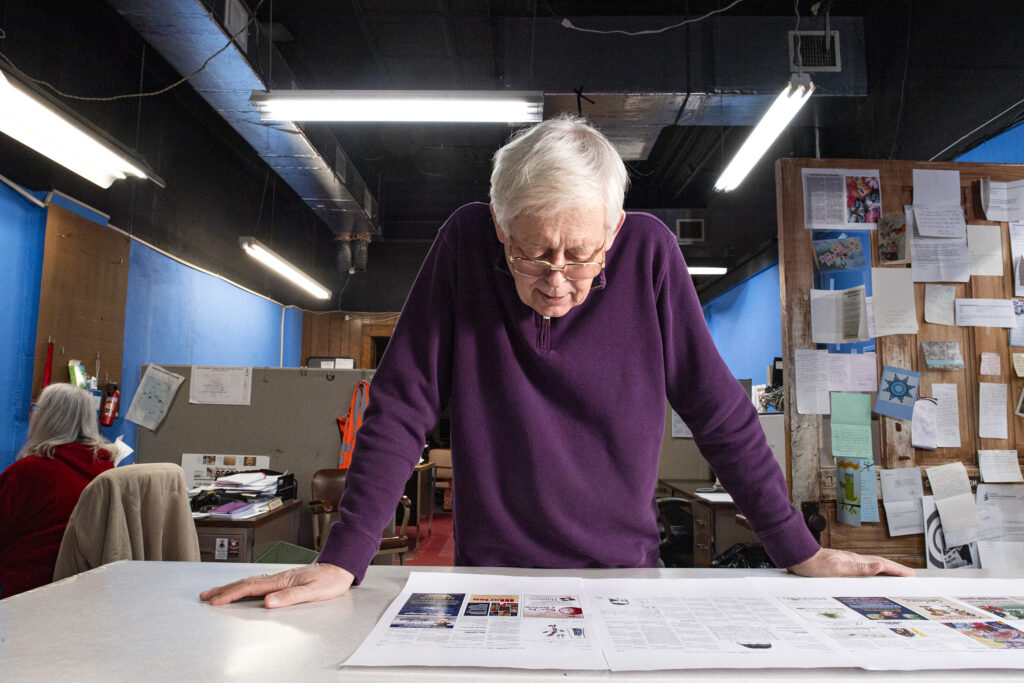
When it comes to community impact, few local newspapers have outshone the Marion County Record in recent years. After a controversial police raid on the newsroom, the police chief was suspended and then resigned. The paper, which has been serving central Kansas for over 100 years, lost its co-owner, Joan Meyer, who suffered sudden cardiac arrest shortly after the raid on her home and newsroom. Her son, Eric Meyer, photographed here in December 2023, took up the mantle and continued publishing the Record throughout the national attention brought on by the raid and its fallout.
A longtime journalism professor, Eric Meyer was aware of the challenges in community news coverage, and the inherent need for it. “Without journalism, there isn’t a healthy democracy. I mean, you can’t make choices without information,” he said.
The Sacramento Valley Mirror
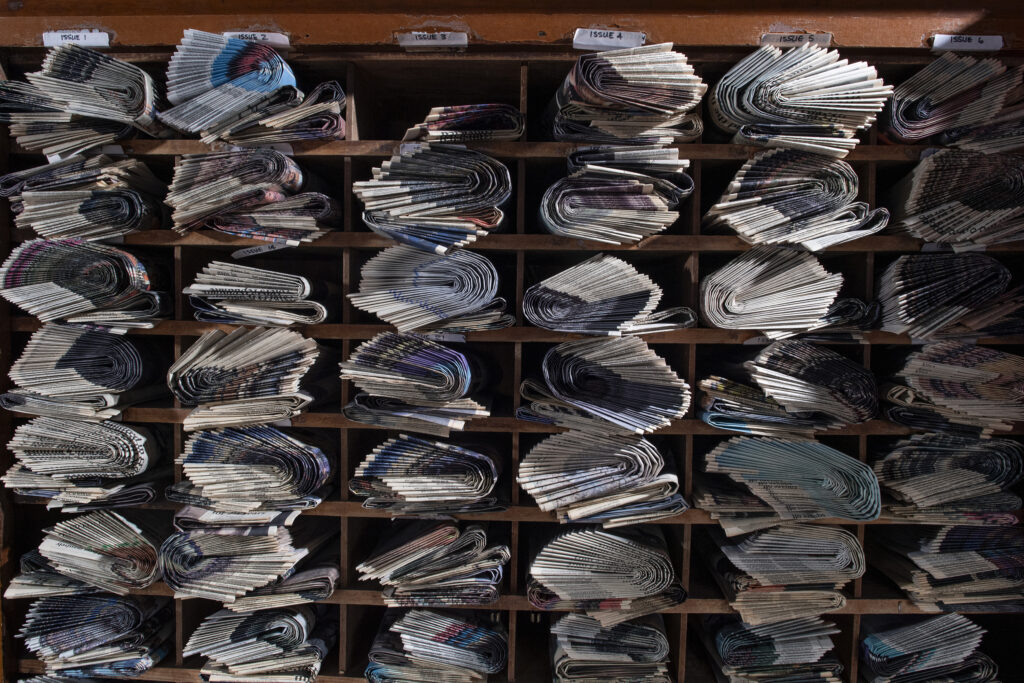
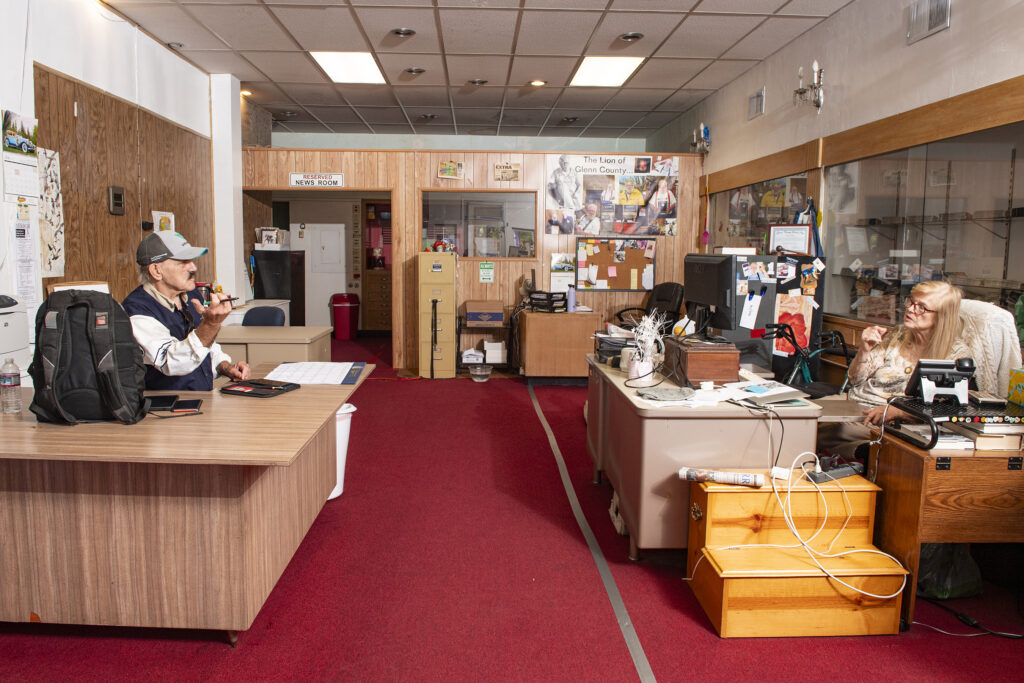
Donna Settle, (pictured below, right), has kept the Sacramento Valley Mirror paper in Glenn County, California, running since the death of her husband, Tim Crews, in 2020. Crews, who served as reporter, editor, and publisher of the paper, was known for keeping local officials on their toes when it came to the First Amendment. Along with filing frequent Freedom of Information Act requests in an effort to combat government secrecy, Crews once spent five days in jail to protect a confidential source. Settle keeps the newspaper going in an area that would otherwise be classified as a news desert. Doug Ross, left, one of the few remaining reporters at the paper, speaks with Settle in 2023, in Willows, Calif.
The Boston Post-Gazette
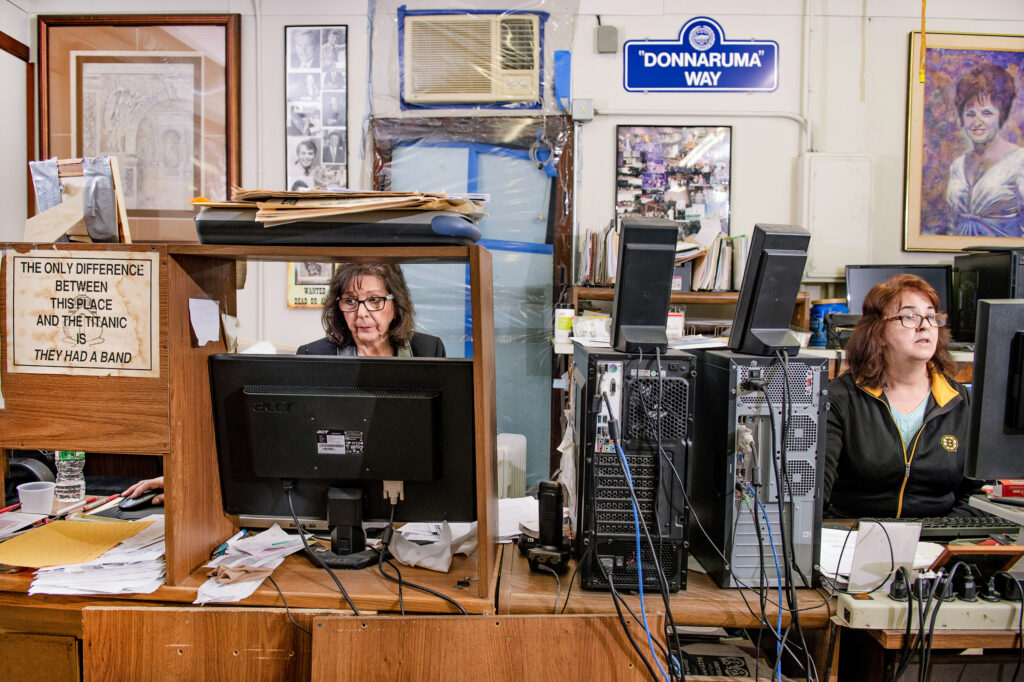
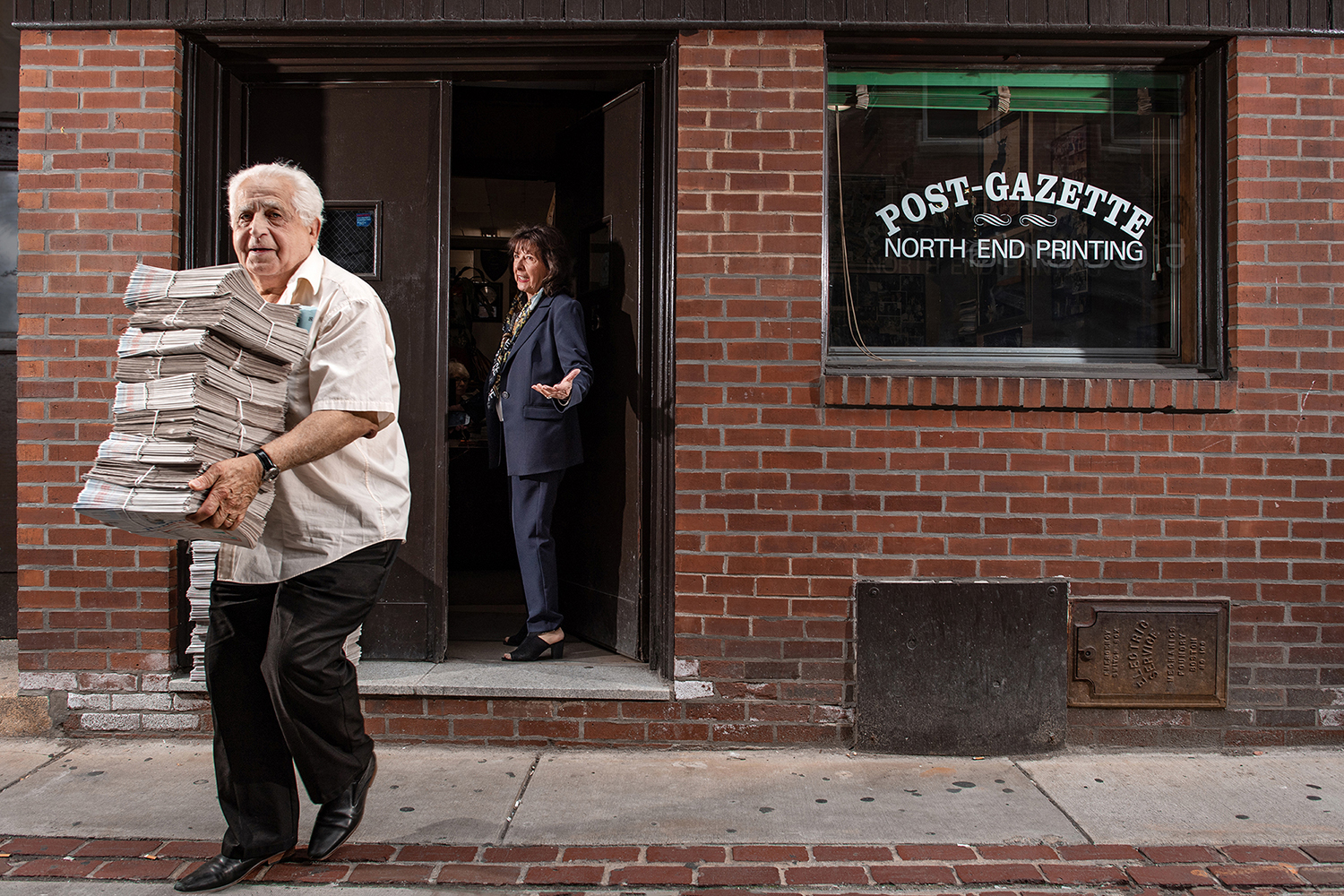
As a third-generation publisher of the oldest ethnic newspaper in the country, Pamela Donnaruma, right, understands the vital connection between a paper and the community it covers. The Post-Gazette has served the Italian American community in Boston for over a century. Donnaruma’s grandfather founded the paper after immigrating to Boston at age 16.
The paper is now run by three women, including Donnaruma. Louie Graffeo, Donnaruma’s boyfriend, helps deliver the weekly edition as it arrives outside the newsroom in Boston’s North End neighborhood.