As every reporter knows, good things — or, at least, good stories — don’t come to those who wait. They come to those who persist. And persist. It also helps to work with an editor who sprinkles magic dust on your labor of love.
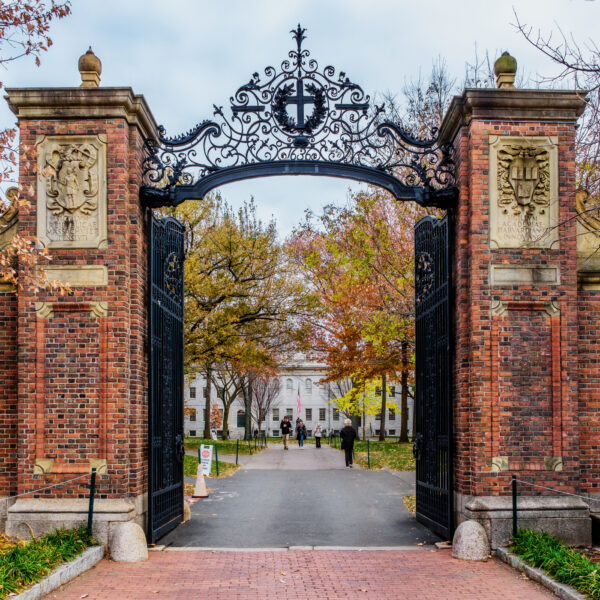
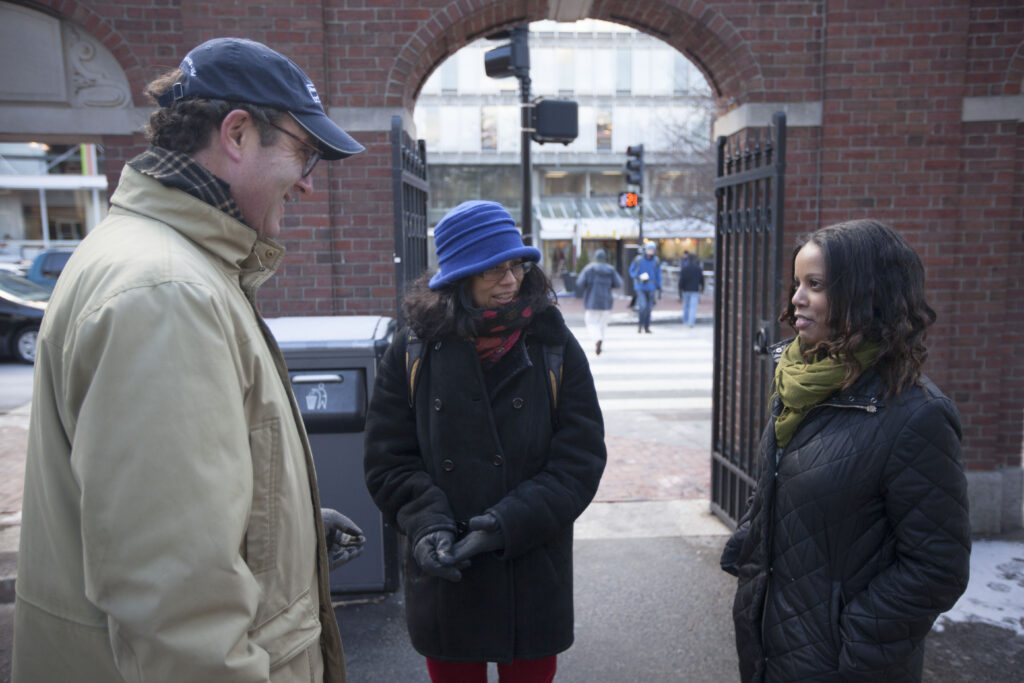
Such is the happy, 13-years-in-the-making saga of the new clothbound edition of “Gates of Harvard Yard: The Iconic Entrances to America’s Oldest University” (Harvard University Press). The book was birthed in an eight-day January term class titled “Rate the Gates” that I co-taught with my fellow fellows Jeneen Interlandi and Finbarr O’Reilly during our 2012-13 Nieman year. Focusing on the 25 gates that enclose the Yard, we asked our students to sharpen their eyes, as well as their storytelling and critical thinking skills. They dug into Harvard’s archives. They eyeballed the gates on frigid winter days. And they pieced together stories about these precious portals that had never before been fully told.
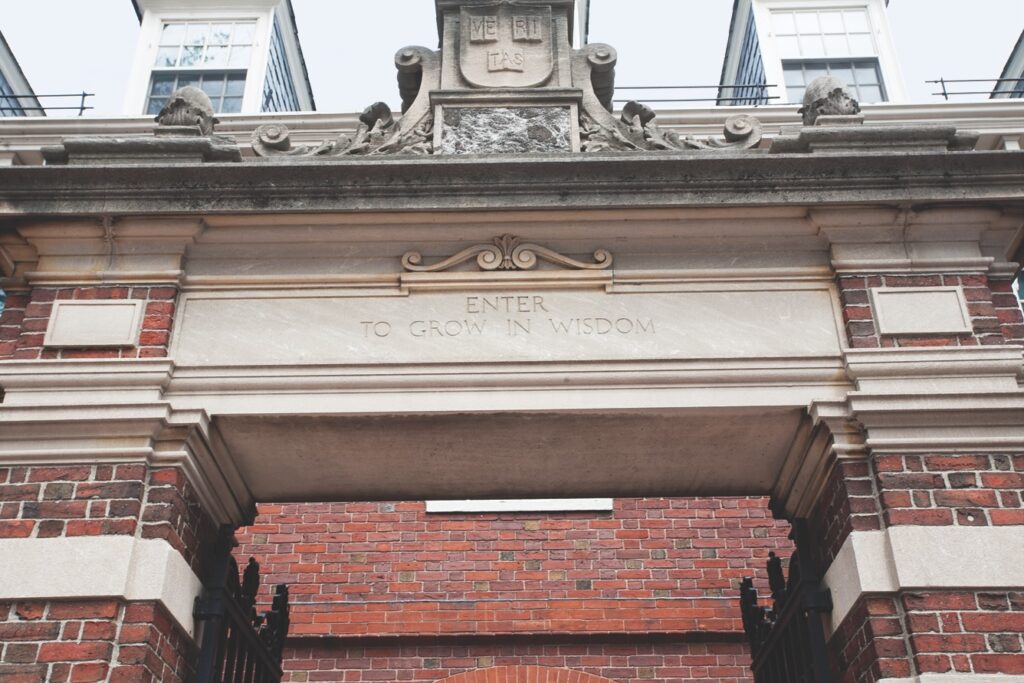
Consider the Dexter Gate along Massachusetts Avenue, best known for its often-quoted inscription “Enter to Grow in Wisdom.” The distinctive threshold, with its alternating stripes of rough brick and smooth limestone, was the product of a mother’s love. Its principal donor, Josephine Dexter, sought to memorialize her son Samuel (Class of 1890), who died in 1894, two days after coming down with meningitis.
I’m often asked: Why would an architecture critic who typically writes about big buildings — skyscrapers, museums, and stadiums — focus on gates that are diminutive by comparison? My answer: Why not? Being an intensely visual person, I was both dazzled and mystified by these portals when I arrived in Cambridge. Dazzled by the way blacksmiths had transformed tough wrought iron into delicate scrollwork. Mystified by things like the numerals that appear on the portals’ flanking fences. What were they about?
Our January term class discovered many things: The gates replaced a simple post-and-rail fence that was considered too modest for a great university. The first of them, Johnston Gate, appeared in 1889. Most were built in the first half of the 20th century, shielding the Edenic precinct of Harvard Yard from the streetcars and urban hurly-burly of Harvard Square. Classes of alumni sponsored many of the gates; their donations were recognized by the aforementioned numerals — an “8” for the Class of 1908, for example.
Like all good architecture, the gates transformed the pragmatic into the aesthetic, turning the necessity of controlling access to the Yard into often-breathtaking compositions. They also articulated the university’s highest ideals, among them a reverence for truth, as seen in stone and metal versions of the three-book Harvard shield that spells out “VE-RI-TAS.” And despite the gates’ small size, they turned out to be profoundly influential.
Rejecting the florid palette of the Victorian era, architect Charles McKim of the celebrated firm McKim, Mead & White returned Harvard to its Georgian-era architectural roots with the design of the Johnston Gate. To ensure that the gate would harmonize with neighboring Massachusetts Hall, built nearly 170 years earlier in 1720, McKim selected overburnt bricks, known as “culls,” whose variegated colors and weathered textures made the new portal seem as old, and as authentic, as its colonial-era predecessor. How very American. In this young country, we often subject architectural materials to instant aging. Johnston Gate’s Georgian Revival style and “Harvard brick” became the university’s design DNA, spreading to everything from the dorms along the Charles River to Harvard Business School. Though the gates rim the edge of the nearly-25 acre Yard, they are central to Harvard’s identity, its public face. When President Donald Trump froze Harvard’s federal funding last year, for example, photos of the gates often illustrated the resulting news stories.
Trouble is, the vast majority of people — students, faculty, and the busloads of tourists who can’t wait to rub their hands on the left foot of the John Harvard statue — simply blow through these portals. The point of the January term class was to counteract this rush. To urge people to slow down, behold the gates, and take in the stories of their creation, as well as the intentions of their architects. If Harvard started to see the gates, it might do a better job of stewarding the gates. As our students found, some were rusting. Others were surrounded by dreary landscaping. One even had a tree sapling growing in it. Ten were permanently locked, several because Harvard had erected buildings behind them, rendering them little more than glorified fences.
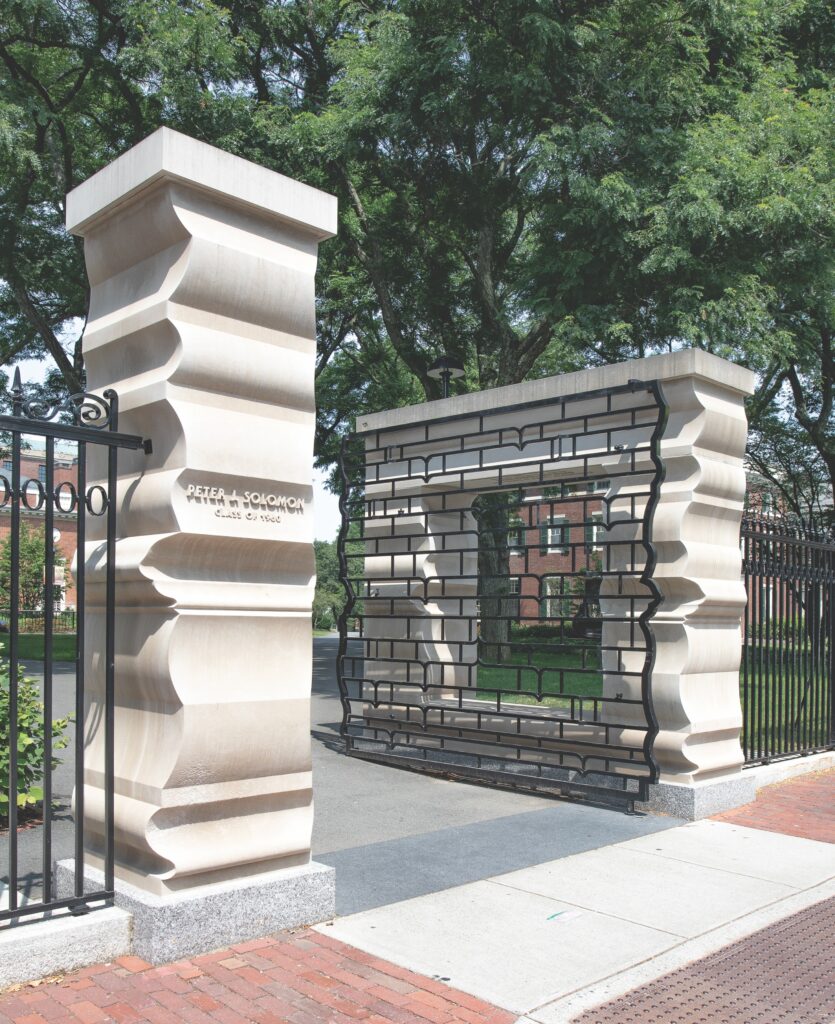
The students’ essays were so well written and illuminating that, with the encouragement of Nieman’s then-deputy curator, James Geary, they became a Nieman e-book in 2013 — the first version of “Gates of Harvard Yard.” Three years later, Princeton Architectural Press published them as a paperback. Then, in 2020, the playful new Peter J. Solomon Gate replaced a banal old one. The new design, inspired by a gift of beloved children’s books to Harvard’s Houghton Library, featured visual allusions to “The Tale of Peter Rabbit” and “Alice’s Adventures in Wonderland.” With the first edition of “Gates of Harvard Yard” rendered outdated, I started thinking about a new one. It would be easy to pull off, right? Just a few updates, and let the presses roll.
Ha! The original publisher wasn’t doing campus architecture guides anymore. Buying the rights to the first edition proved to be a months-long, bureaucratic nightmare. Then, in 2024, Harvard locked the gates in response to the pro-Palestinian encampment in the Yard. You had to show an ID to get in. By shutting the gates, critics charged, the university was stifling open dialogue.
I know how to read a room. It was not the right moment to be singing the praises of the gates. So I bided my time until after Harvard reopened the Yard to the public in June 2024, and a ceasefire in Gaza began in January 2025. Only then did I propose a new edition to Ann Marie Lipinski, then the curator of the Nieman Foundation. Lipinski, always a strong supporter of the project, emailed George Andreou (Class of 1987), the director of Harvard University Press. Andreou replied that he wished that HUP had published the book initially (Nieman had offered it to HUP in 2013, but was turned down) and connected me to Sharmila Sen, HUP’s editorial director. Sen (Class of 1992) turned out to be an author’s dream.
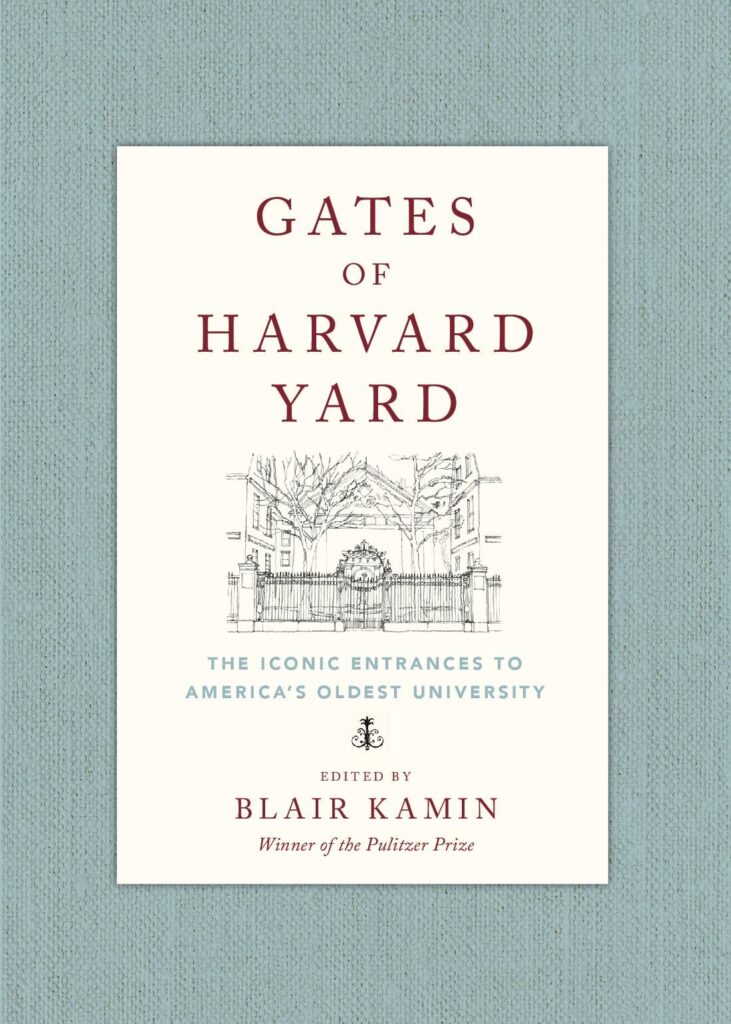
She didn’t replicate the first edition. She and her team vastly improved it. Hardback instead of paperback, with a redesigned linen cover that evoked the elegance of the gates. A new interior layout, airier and easier to read. A sewn book binding, not glued, so readers can fully open the double-truck photos of the gates without breaking the binding and making the book fall apart. For good measure, I added an essay about the new gate and updated the story of the gates from 2016 to the present. As of this writing, only 11 are open during daylight hours; four have remained closed since the 2024 encampment.
I would have settled for any second edition. But this one exceeded my expectations. Persistence pays. And it pays to have a great editor, especially one who resisted the temptation to retitle the book “25 Ways to Get Into Harvard.” The broader lesson of this long-unfolding story: There’s something special, as Lipinski observed in the book’s foreword, about “the stories we find in the quiet places.” Mine was the often-overlooked entranceways to a great university. What’s yours?
Blair Kamin, NF '13, is the former architecture critic of the Chicago Tribune.